
Many shoppers struggle to find the right women’s shoe size when converting from men’s sizes. Differences in length, width, and standard sizing increments often lead to confusion, making it difficult to choose shoes that fit comfortably. Without a clear method, online purchases or brand-specific variations can result in shoes that feel too tight or too loose.
Fit issues are common because men’s and women’s shoes are measured differently across regions. US, UK, and EU sizing systems do not always align, and brands may vary in their interpretation of standard sizes. These factors can leave shoppers uncertain about which size to select.
This guide provides a clear, step-by-step approach to converting men’s shoe sizes to women’s in US, UK, and EU measurements. By following these methods, readers can select the correct size with confidence, avoid common mistakes, and ensure a comfortable fit across different shoe types.
Understanding the Difference Between Men’s and Women’s Shoe Sizes

Men’s and women’s shoes are designed with differences in length, width, and standard size increments. Understanding these differences is essential for finding the right fit, avoiding discomfort, and making accurate conversions between men’s and women’s sizes.
Length Differences
The length of women’s shoes is generally shorter than men’s shoes in the same nominal size. For instance, a US men’s size 8 usually corresponds to a US women’s size 9.5 to 10. This pattern is consistent across most brands and regions, including US, UK, and EU sizing standards. Knowing the length difference allows shoppers to make more informed decisions and reduces the risk of buying the wrong size.
Width Differences
Women’s shoes tend to be narrower than men’s shoes, especially in the forefoot and toe box areas. Men’s shoes are typically wider to accommodate broader feet. When women wear men’s shoes, they may notice extra space in the width, while men wearing women’s shoes might find them too tight. Considering width is important for comfort and foot health, especially for athletic shoes or leather footwear that requires a snug fit.
Standard Size Increments
Shoe sizes increase in standard increments, usually by half or full sizes depending on the region. In the US, men’s sizes generally increase by one size for every 0.33 inches of foot length, while women’s sizes follow a similar increment pattern starting from a smaller base measurement. Understanding these increments helps in accurately converting men’s sizes to women’s across different sizing systems.
Practical Example
To illustrate, a US men’s size 8 corresponds approximately to a US women’s size 9.5 to 10. A UK men’s size 7 converts to a UK women’s size 8, and an EU men’s size 42 typically equals an EU women’s size 43.5. These conversions provide a reliable starting point when shopping across men’s and women’s shoe sizes and can help prevent sizing errors.
Men’s to Women’s Shoe Size Conversion Chart (US, UK, EU)
Accurately converting men’s shoe sizes to women’s requires understanding the differences across US, UK, and EU systems. The following chart provides a clear reference to help you find the right fit. Using this chart can reduce sizing mistakes and make online or in-store shoe shopping easier. You can also create a downloadable or image version for quick reference.
| Men’s Size (US) | Women’s Size (US) | Men’s Size (UK) | Women’s Size (UK) | Men’s Size (EU) | Women’s Size (EU) |
|---|---|---|---|---|---|
| 5 | 6.5–7 | 4.5 | 5.5 | 37 | 38.5 |
| 6 | 7.5–8 | 5.5 | 6.5 | 38 | 39.5 |
| 7 | 8.5–9 | 6.5 | 7.5 | 40 | 41.5 |
| 8 | 9.5–10 | 7.5 | 8.5 | 41 | 42.5 |
| 9 | 10.5–11 | 8.5 | 9.5 | 42 | 43.5 |
| 10 | 11.5–12 | 9.5 | 10.5 | 43 | 44.5 |
| 11 | 12.5–13 | 10.5 | 11.5 | 44 | 45.5 |
| 12 | 13.5–14 | 11.5 | 12.5 | 45 | 46.5 |
How to Use the Chart
- Identify Your Men’s Shoe Size: Find your size in your preferred system, whether US, UK, or EU.
- Find the Corresponding Women’s Size: Use the matching women’s size in the same system to select the best fit.
- Consider Size Range: If your size falls between two values, take into account the shoe type and your foot width when choosing the larger or smaller option.
Tips for Accurate Fit
- Measure Your Foot Precisely: Measure in centimeters for extra accuracy, especially when shopping online.
- Check Brand Variations: Brands may differ slightly in sizing, so always consult the official size guide.
- Account for Foot Width: Foot width affects comfort even if the length is correct, particularly for sneakers and formal shoes.
How to Accurately Convert Men’s Shoe Sizes to Women’s
Converting men’s shoe sizes to women’s requires understanding the differences in each sizing system. Using the correct conversion rules ensures a proper fit and avoids common mistakes when shopping online or in stores.
US Shoe Sizes
In the US sizing system, women’s shoes are typically 1.5 to 2 sizes larger than men’s shoes of the same nominal number. For example, a US men’s size 8 generally corresponds to a US women’s size 9.5 to 10. To find your women’s size from a men’s size, simply add 1.5 to 2 to the men’s number.
Tips for accuracy include measuring your foot length in inches or centimeters and checking the shoe brand’s official guide, as some manufacturers may adjust sizing slightly. This rule works well for sneakers, casual shoes, and most standard footwear types.
UK Shoe Sizes
For UK sizes, the conversion is slightly simpler. Women’s shoes are usually one size larger than men’s shoes. For example, a UK men’s size 7 generally converts to a UK women’s size 8. When using this rule, it is important to consider foot width as UK shoes tend to be narrower for women. Checking the specific brand’s sizing recommendations can help ensure a precise fit.
This conversion is consistent across casual, athletic, and formal footwear, and can be applied to most UK brands without complication.
EU Shoe Sizes
In European sizing, women’s shoes are generally 1.5 sizes larger than men’s shoes. For instance, an EU men’s size 42 usually corresponds to an EU women’s size 43.5. To convert, add 1.5 to the men’s EU size to find the equivalent women’s size.
When using EU sizes, it is helpful to verify measurements in centimeters because European shoes are based on foot length rather than gender-specific increments. This ensures a better fit, particularly for brands that offer unisex or narrow designs.
Important Tips for a Perfect Fit
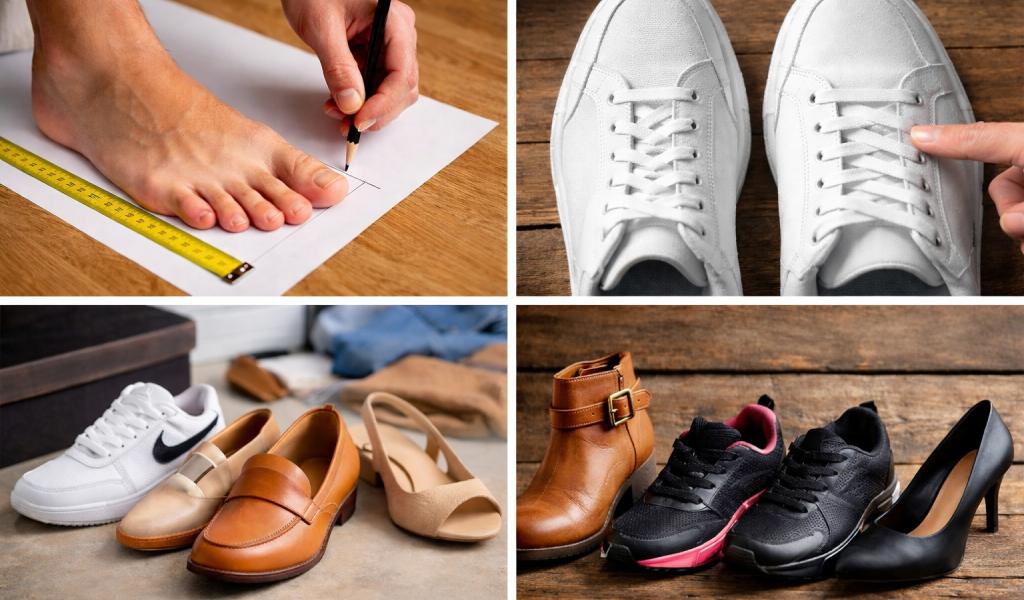
Ensuring the right shoe size goes beyond simply converting numbers between men’s and women’s sizes. Taking additional factors into account can make the difference between a comfortable fit and a shoe that feels tight or loose.
Measure Your Foot Accurately
For the most precise sizing, measure your foot in centimeters. Place a piece of paper on a flat surface, stand on it, and mark the tip of your longest toe and the back of your heel. Measure the distance and compare it to the shoe brand’s size chart. Measuring both feet is recommended, as one foot is often slightly larger than the other. Always use the larger measurement when choosing a size.
Consider Foot Width
Foot width can affect comfort even when length is correct. Women’s shoes are generally narrower than men’s, so men wearing women’s shoes might feel a tighter fit, and women wearing men’s shoes may notice extra space. Pay attention to narrow, regular, or wide sizing options, especially for sneakers, formal shoes, or boots.
Account for Brand Variations
Brands may have slight differences in sizing. Some manufacturers run larger or smaller than standard sizes, so it is important to check the official brand chart before purchasing. Reading customer reviews can also provide insight into whether a brand runs true to size, large, or small.
Consider Shoe Type
The type of shoe affects how it fits. Sneakers, boots, and heels each have unique shapes and construction. Heels often require a snug fit at the heel and arch, boots may need extra width for calf or ankle space, and sneakers should allow slight room for toe movement during activity. Understanding the shoe type can prevent discomfort and ensure optimal fit.
FAQs
Yes, women can wear men’s shoes, but it is important to consider differences in width and sizing. Men’s shoes are typically wider, so women may notice extra room across the toe box. Checking the fit and, if possible, trying the shoe on helps ensure comfort.
To convert kids’ sizes to women’s, start with the kids’ US size and add approximately 1.5 to 2 sizes for the equivalent women’s size. Using a simple guide or chart can help determine the correct conversion in US, UK, or EU sizing. Measuring the foot length provides additional accuracy.
No, shoe sizes can vary between brands. Even if two brands list the same nominal size, the actual fit may differ. Always consult the official brand-specific chart and read customer reviews to understand how a particular brand fits compared to standard sizing.
Converting men’s sneakers to women’s follows the same US, UK, and EU rules. Start with the men’s size and apply the standard conversion increment for the region. For a snug fit, consider the shoe type and your foot width, and try on the sneakers if possible before purchasing.
Key Takeaways
Converting men’s shoe sizes to women’s requires understanding the differences in US, UK, and EU sizing systems. Using the conversion rules and the provided chart ensures accurate measurements and helps prevent common fit issues. By accounting for length, width, and standard size increments, shoppers can make informed choices when selecting shoes across different brands and regions.
For the most precise results, measure your foot in centimeters and compare it with the chart before making a purchase. This simple step increases the likelihood of a comfortable fit and reduces sizing errors.
For further guidance, explore related resources such as how to measure your foot for shoes or brand-specific sizing guides. These tools complement the men’s to women’s shoe size calculator and provide a reliable, accurate shoe sizing guide.