
Navigating the nuances of wedding guest etiquette often begins with a single line on an invitation: the dress code. Understanding these standard style guidelines ensures you stay perfectly coordinated, polished, and respectful of the couple’s vision.
Wedding attire varies drastically depending on the event’s formal level, the venue location, and the time of day. This guide decodes the complexities of modern and traditional dress codes to help you arrive with confidence and style.
Whether you are attending a gala or a relaxed backyard ceremony, dressing appropriately is a fundamental sign of respect for the couple’s milestone celebration.
- 1. White-Tie: The Absolute Peak of Formality
- 2. Black-Tie: The Upscale Evening Standard
- 3. Formal or Black-Tie Optional: Flexible High Elegance
- 4. Cocktail Attire: The Modern Balance of Style
- 5. Semi-Formal or Dressy Casual: Smart and Coordinated
- 6. Festive: Creative and Expressive Fashion
- 7. Casual: Laid-Back Yet Respectful
- Essential Wedding Guest Etiquette: Do’s and Don’ts
- Frequently Asked Questions About Wedding Attire
- Conclusion: Mastering the Art of the Guest Look
1. White-Tie: The Absolute Peak of Formality
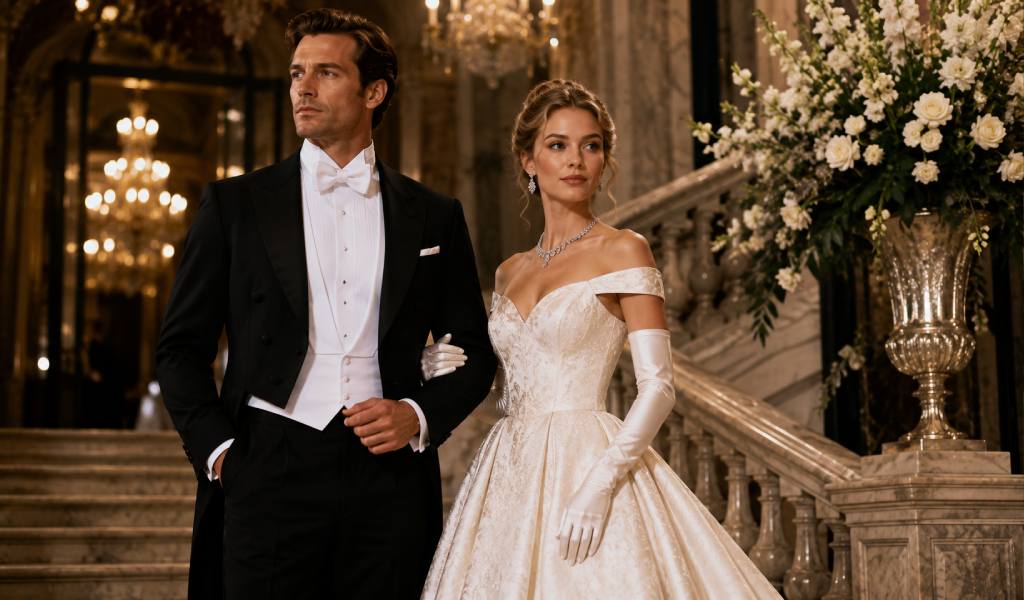
White-tie represents the ultimate, absolute peak of formal dressing in Western culture. Reserved for the most prestigious celebrations—such as royal events, state dinners, or highly elite gala-style weddings—this dress code leaves no room for casual interpretation.
It is a rare and prestigious request that demands strict adherence to traditional tailoring and evening elegance to maintain a cohesive, high-society atmosphere.
Traditional Evening Gowns for Women
For women, white-tie necessitates the highest level of evening wear available. The primary requirement is a full, formal, floor-length evening ball gown. These garments are typically characterized by grand silhouettes and are crafted from the most luxurious materials, such as heavy silk, fine satin, or intricate lace.
To complete the ensemble, high-end jewelry and elegant hair updos are considered customary. While optional, opera-length white gloves are a traditional staple that adds a layer of historic sophistication, though they should be removed during dinner or when greeting the couple in a formal receiving line.
The Strict Tailcoat Standard for Men
Men face a very specific and non-negotiable set of requirements under a white-tie code. The centerpiece of the outfit is a black tuxedo jacket featuring formal tails. This is paired with a white piqué button-down shirt featuring a stiffened bib, a matching white piqué vest, and a white hand-tied bow tie.
To finish the look, black patent leather footwear is mandatory. Wearing a black bow tie in this setting is a significant sartorial error, as it would technically demote the guest to a lower formal tier.
2. Black-Tie: The Upscale Evening Standard
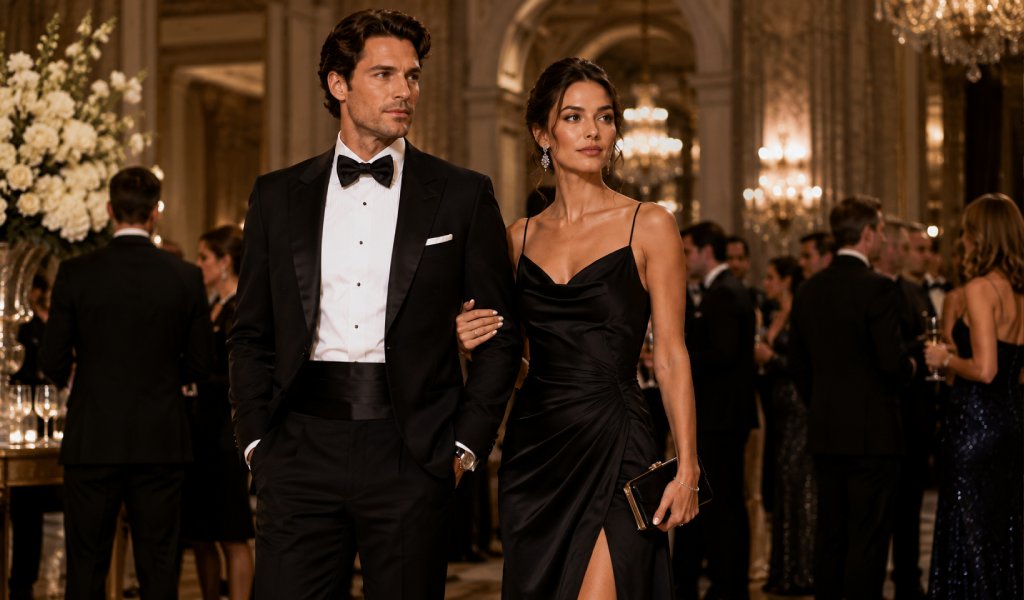
Black-tie is the most common upscale evening wedding dress code found in modern luxury celebrations. It indicates a sophisticated atmosphere where the couple expects an elegant, polished, and perfectly tailored look from every guest.
While it offers slightly more variety than white-tie, it remains a rigid category that focuses on nocturnal glamour and refined silhouettes appropriate for high-end ballrooms or estates.
Evening Glamour for Women
The standard for women in a black-tie setting is a floor-length evening gown. These gowns should be made from rich, luxurious fabrics; materials such as velvet, silk, satin, or delicate lace are highly preferred to match the evening’s prestige.
For those seeking a more contemporary approach, chic and sophisticated pantsuits are also fully acceptable, provided they are impeccably tailored and styled with formal accessories to maintain the necessary level of prestige.
The Classic Tuxedo for Men
For men, black-tie is synonymous with the tuxedo. A complete tuxedo ensemble consists of a matching black jacket and trousers that feature a signature satin side stripe. The look is anchored by a crisp tuxedo shirt and a black bow tie.
To ensure a seamless and polished transition between the shirt and the trousers, a formal vest or a traditional satin cummerbund must be worn. In modern luxury settings, a midnight blue tuxedo is also considered a stylish and acceptable alternative to classic black.
3. Formal or Black-Tie Optional: Flexible High Elegance
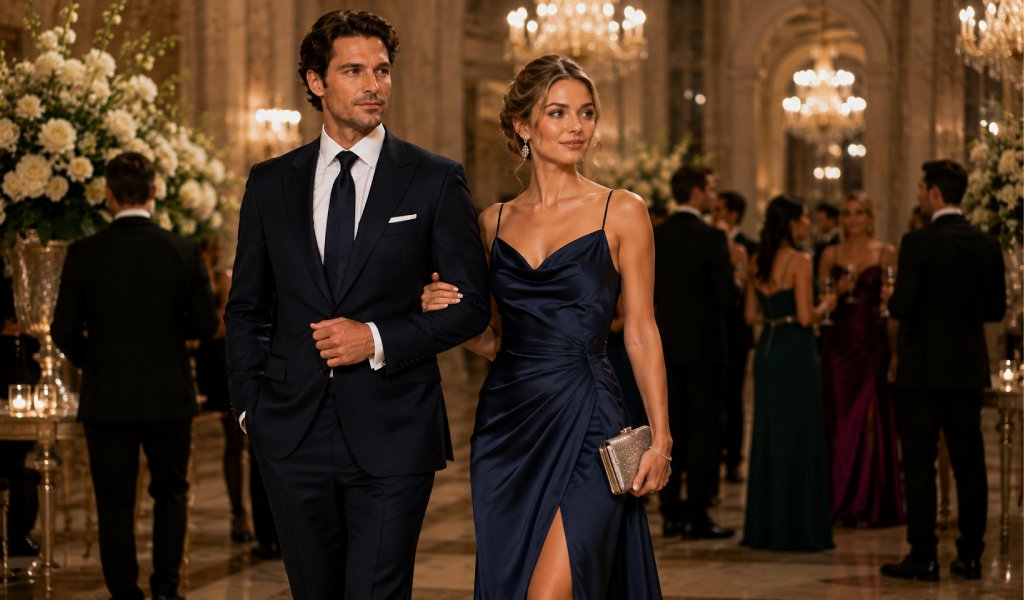
The formal or black-tie optional dress code is designed to provide a high level of elegance while granting guests a bit more flexibility in their wardrobe choices.
This is a popular choice for couples who want a black-tie aesthetic but wish to be inclusive of guests who may not own a tuxedo or a full evening ball gown. It suggests a high-end event while allowing for slightly more modern silhouettes.
Versatile Styles for Women
Women have several stylish avenues to explore under this code. While floor-length evening gowns remain a popular and safe choice, elegant jumpsuits or sophisticated, fancy cocktail dresses are also welcome. Unlike stricter tiers, hemlines that show the ankles or rest at the mid-calf are completely appropriate.
This allows guests to experiment with different shoe styles and silhouettes that may be easier to wear for long periods of movement and dancing.
Suit vs. Tuxedo Options for Men
For men, a tuxedo is fully welcome and often preferred, but it is not strictly required. The standard alternative is a well-tailored dark suit—specifically in black, charcoal gray, or deep navy—paired with a crisp dress shirt and a dark, conservative tie.
It is important to avoid light-colored suits or casual fabrics like linen, as they would look out of place against the black-tie elements of the wedding.
4. Cocktail Attire: The Modern Balance of Style
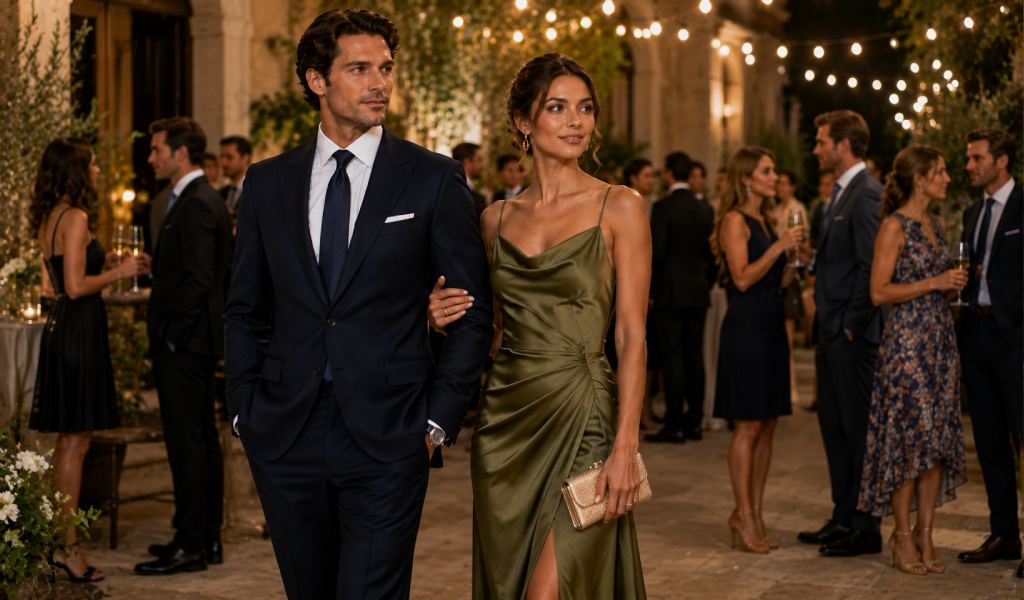
Cocktail attire strikes a popular balance between being elegant and comfortable, bridging the gap between day-wear and formal night-wear. It is a versatile dress code typically favored for weddings that begin in the late afternoon and transition into an evening reception.
The goal is to appear polished and “party-ready” with a look that is refined yet manageable for a lively social environment.
| Attire Element | Specification for Women | Specification for Men |
|---|---|---|
| Primary Garment | Tea-length, knee-length, or midi-length dress | A tailored suit is required |
| Alternative | Stylish, high-quality jumpsuits | No alternative (suit mandatory) |
| Footwear | Elegant heels or dressy flats | Leather oxfords or loafers |
| Accessories | Statement jewelry and clutches | Mandatory necktie or bowtie |
The “Golden Mean” of Dressing
Because cocktail attire is the most frequent request, it is often seen as the “golden mean” of wedding dressing. For women, the “little black dress” is a staple, provided it is of high quality and paired with bold jewelry to elevate the ensemble.
Men should prioritize a sharp fit in their suiting, opting for lighter colors if the ceremony is held during the day and transitioning to deeper tones for evening affairs.
5. Semi-Formal or Dressy Casual: Smart and Coordinated
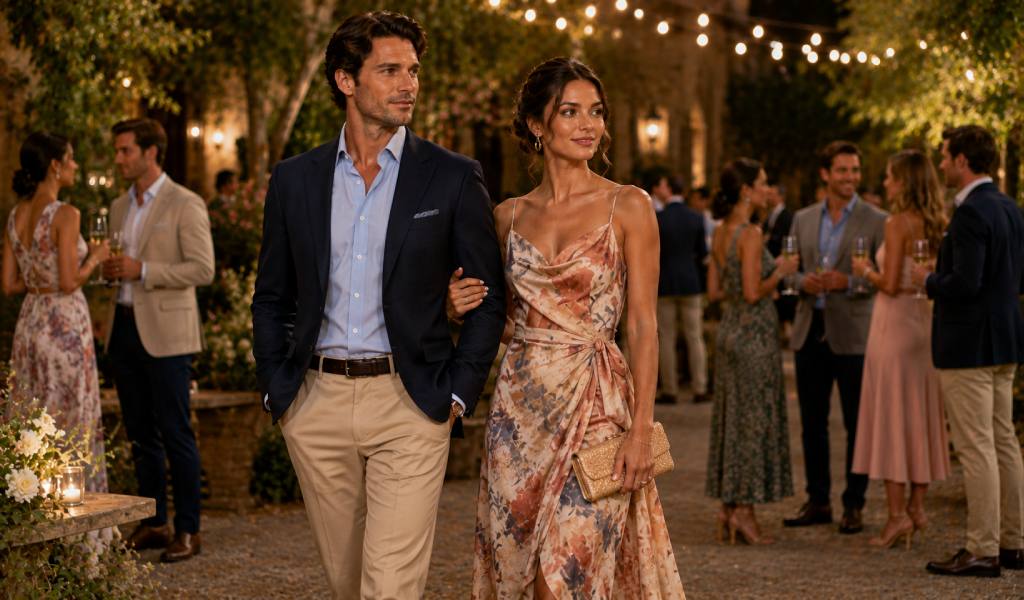
The semi-formal or dressy casual tier focuses on looking smart, neat, and highly coordinated without being strictly stiff or overly structured. This dress code is often utilized for brunch weddings, garden ceremonies, or outdoor events where a full suit or gown might feel restrictive or out of place.
It requires a balance of professional presentation and relaxed silhouettes that suit the environment.
Relaxed Elegance for Women
For women, this dress code suggests below-the-knee dresses, flowy slip dresses, or dressy separates like a high-quality skirt and blouse. This is an ideal time to wear floral prints or lighter fabrics such as chiffon.
Since these events are often held in gardens or on varied outdoor terrain, dressy flats or wedge heels work beautifully and offer significantly more stability than traditional stilettos.
Polished Separates for Men
Men should opt for a clean dress shirt paired with slacks or chinos. While a suit jacket or blazer is encouraged to maintain a polished and respectful appearance, a tie is considered completely optional under the semi-formal label.
This allows for a more breathable outfit that remains distinguished enough for a wedding celebration without the formal constraints of a tuxedo.
6. Festive: Creative and Expressive Fashion
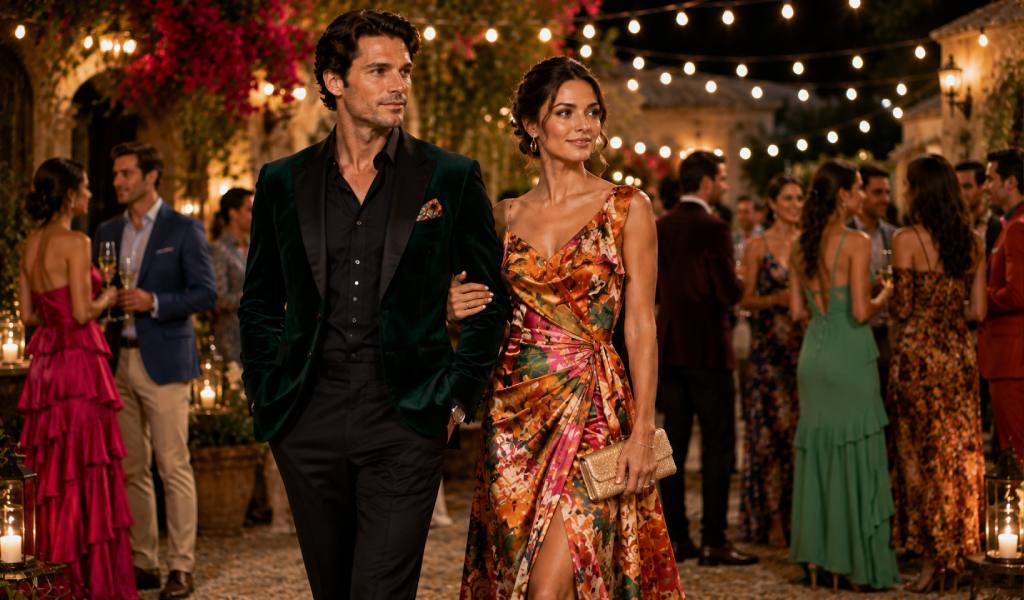
Festive attire is a relatively newer and highly creative dress code designed for guests to have fun with their fashion choices. It signals to the attendees that the couple encourages bold choices, unique textures, and a celebratory atmosphere that reflects their personal style.
This code is essentially a license to be playful while maintaining a baseline of cocktail-level formality.
Embracing Playful Details
Guests are encouraged to embrace bold colors and unique silhouettes that stand out from traditional wedding palettes. For women, this might mean a cocktail-style dress with architectural details, playful sequins, or unique accessories.
For men, it is the perfect time to wear a patterned or textured suit, perhaps in velvet or linen. These looks are often styled with fun pocket squares or ties that showcase the guest’s individual personality.
7. Casual: Laid-Back Yet Respectful
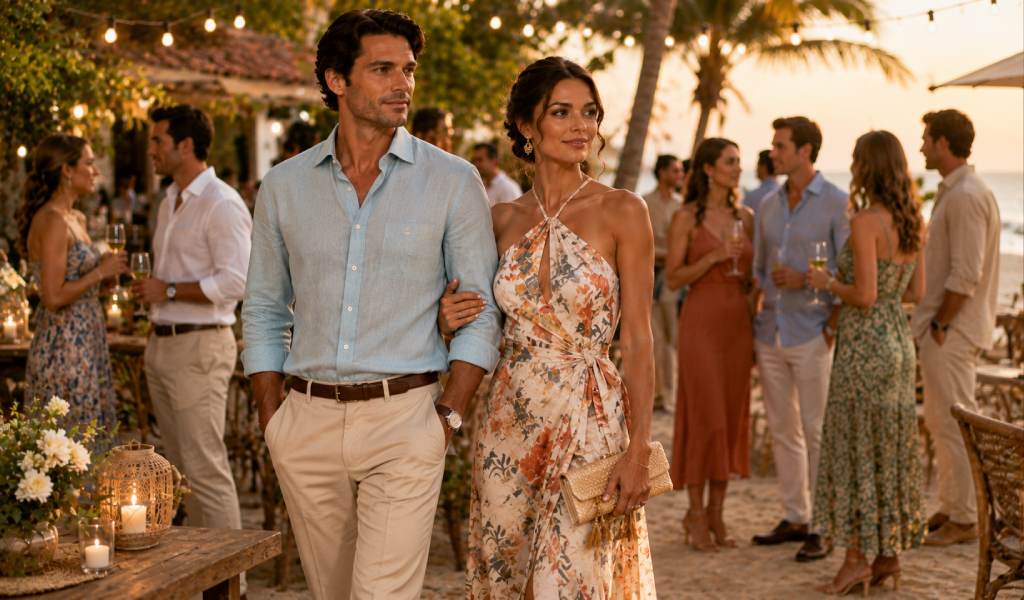
A casual dress code indicates a laid-back, welcoming tone, most common for daytime, backyard, or beach celebrations. However, it is vital to remember that “casual” in a wedding context does not mean athletic clothing, sweatpants, or ripped denim.
It is still a milestone event that requires a level of polish and respect for the hosts and the significance of the ceremony.
Breezy Options for Women
Women can embrace the relaxed atmosphere with a breezy sundress, a casual maxi dress, or lightweight separates like a linen skirt and top. Because these weddings often take place in sandy or grassy outdoor settings, sandals or comfortable flats are the standard footwear choice.
The focus should be on staying cool and comfortable while looking put-together and festive.
Neat Collared Ensembles for Men
For men, the standard is a neat collared shirt, such as a high-quality polo or a short-sleeve button-down shirt. These should be paired with khakis or nice chinos rather than everyday jeans.
In a casual wedding setting, jackets and ties are entirely optional, allowing guests to stay cool throughout the celebration without feeling underdressed for the occasion.
Essential Wedding Guest Etiquette: Do’s and Don’ts
Beyond the specific dress codes, there are universal rules of wedding guest attire that ensure you remain a respectful attendee.
- Do Respect the Venue: A beach wedding requires different footwear than a ballroom.
- Don’t Wear White: Unless specifically requested by the couple, avoid white, ivory, or cream to ensure the bride remains the focus.
- Do Consider the Time of Day: Darker colors and heavier fabrics generally suit evening events, while lighter colors and fabrics are better for the morning and afternoon.
- Don’t Be Too Revealing: Weddings are family events; ensure your outfit is appropriate for a ceremony setting.
- Do Follow the Couple’s Vision: Even if a dress code feels unique, making an effort to match their requested theme shows your support for their big day.
Frequently Asked Questions About Wedding Attire
What should I do if the invitation lists no dress code?
If a dress code is missing, look at the venue and the time of the wedding. An evening wedding at a luxury hotel usually implies at least cocktail attire, while a morning ceremony in a public park suggests semi-formal or casual. When in doubt, it is always better to be slightly overdressed than underdressed to show respect for the couple.
Is wearing black to a wedding acceptable?
Yes, wearing black is now widely accepted for most wedding dress codes, particularly for evening, black-tie, and formal events. However, ensure the style of the dress remains celebratory rather than somber. For daytime or casual weddings, lighter colors are generally more appropriate.
Are jumpsuits appropriate for formal weddings?
Absolutely. High-quality, elegant jumpsuits are a sophisticated and modern choice for formal and black-tie optional weddings. Look for styles in dressy fabrics like silk or crepe and pair them with elevated accessories to meet the formal requirements.
Conclusion: Mastering the Art of the Guest Look
Choosing the right wedding attire is a powerful way to show your support for the couple and their new journey together.
By understanding the distinctions between these seven primary dress codes—from the absolute peak of white-tie to the relaxed nature of a casual beach wedding—you can select an outfit that is both stylish and appropriate.
Always remember to consider the venue and weather as your secondary guides to ensure your look is as functional as it is fashionable. Armed with these professional insights, you can navigate any wedding invitation with ease, ensuring you look and feel your best as you celebrate the couple’s new chapter.