
In high-stakes corporate environments, your appearance serves as a silent ambassador for your competence and attention to detail. Business professional attire is not merely a dress code; it is a standardized visual language of authority, reliability, and respect for tradition.
Often required in sectors like finance, law, and government, this formal standard prioritizes a structured silhouette and a conservative aesthetic. Navigating these requirements requires a nuanced understanding of fit, fabric, and formality.
This comprehensive guide provides the definitive blueprint for mastering professional dress, ensuring you project an image of unwavering excellence and executive presence in every boardroom or courtroom.
The Strategic Foundation of Executive Appearance
To master the art of corporate dressing, one must first internalize the “core principles” that separate the elite professional from the average employee.
In traditional corporate environments, the goal is not to express individual flair through trendy fashion but to demonstrate adherence to a shared standard of excellence. This involves a disciplined approach to garment selection where every piece serves the larger goal of projecting stability.
By focusing on the structural integrity of your clothing and the subtle cues of high-quality fabrics, you establish a baseline of trust before you even speak.
The Rule of Identical Matching Sets
In the realm of high-level corporate dress, the “matching set” is a non-negotiable requirement. Your jacket must exactly match your trousers or skirt in both color and fabric, as suit separates are strictly prohibited in this category.
This uniformity creates a seamless, elongated silhouette that signals a high degree of formality and meticulous preparation.
Attempting to mix a blazer with non-matching trousers, even if the colors are similar, disrupts the visual cohesion required for this dress code and can make the wearer appear less organized or under-prepared for the environment.
Navigating the Conservative Color Palette
Color choice in a professional setting is about projecting calm and reliability rather than drawing attention through bold or neon hues. You should stick to conservative base colors like navy blue, charcoal gray, or black. These colors are traditionally associated with leadership and trustworthiness in global business cultures.
While lighter grays may be acceptable in warmer months, the dark, neutral palette remains the safest and most authoritative choice for year-round professional engagements, ensuring you never appear out of place in a formal setting.
The Precision of Professional Tailoring
Even the most expensive suit will fail to impress if the fit is incorrect. Flawless tailoring is essential, as clothes should comfortably “skim” your body without being restrictive or excessively loose.
You must avoid items that are tight, baggy, or prone to wrinkling, as these flaws suggest a lack of attention to detail and can undermine your professional authority.
A well-tailored suit enhances your natural frame, providing a sharp, clean line from the shoulder to the hem of the trouser or skirt, which is essential for a polished look.
Men’s Architectural Dress Requirements
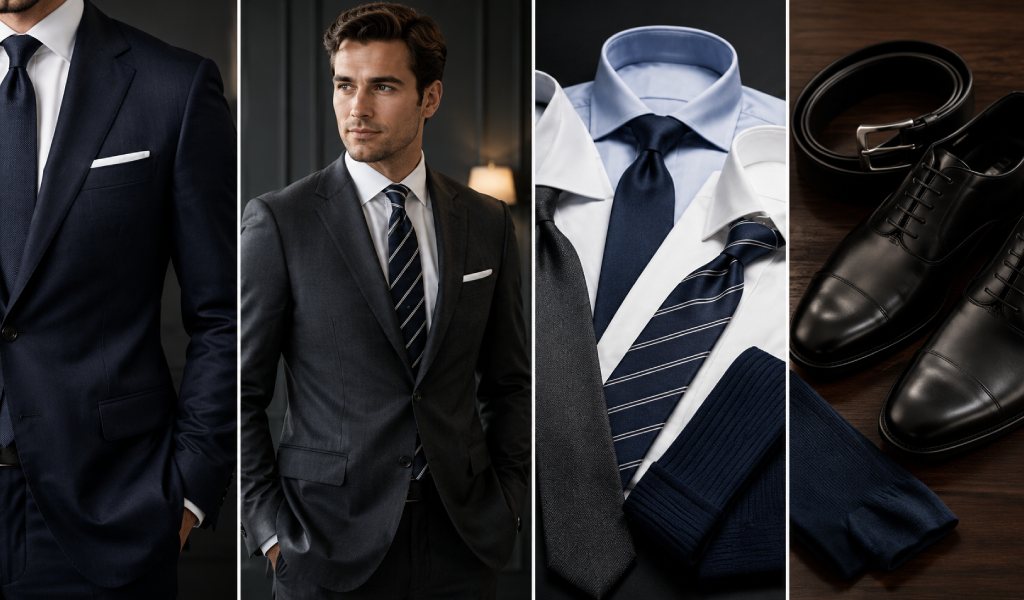
For men, the business professional standard is built around the classic two-piece suit, typically in dark gray or navy blue. This ensemble is designed to be understated yet powerful, focusing on clean lines and high-quality materials.
Every component, from the lapels of the jacket to the texture of the tie, must be carefully selected to maintain a conservative and polished appearance that commands respect in any professional interaction.
Understanding the nuances of each layer allows a professional to build a wardrobe that is both versatile and strictly compliant with formal standards.
The Suit: Dark Gray and Navy Dominance
The foundation of the male professional wardrobe is the suit jacket, which should feature notched or peaked lapels. Flashy or overly trendy lapel styles should be avoided to maintain a timeless and serious look.
The choice of navy or charcoal provides a versatile canvas that works across almost all formal corporate events. The fabric should ideally be a high-quality wool or wool-blend that holds its shape and resists wrinkles throughout a long day of meetings and travel, maintaining that “freshly pressed” appearance.
Shirting and Neckwear Essentials
Beneath the jacket, you must wear a long-sleeved, collared dress shirt in solid white or light blue. It is imperative that the shirt is freshly ironed or steam-pressed to ensure a crisp appearance that lasts throughout the workday.
A silk necktie is a mandatory component for men, serving as the focal point of the outfit. You should choose ties in solid dark shades or simple, classic stripes, while strictly avoiding loud novelty patterns that distract from your professional message.
Footwear and Leather Coordination
Your choice of footwear and accessories can either elevate or undermine your entire look. High-quality leather dress shoes, such as Oxfords or Derbies, are the standard for professional environments.
A critical rule for men is leather matching: your leather belt must match the exact shade and texture of your leather dress shoes.
Additionally, you should match your socks to your trousers rather than your shoes to maintain a continuous visual line that doesn’t break at the ankle, ensuring a seamless aesthetic when seated.
Women’s Executive Wardrobe Standards
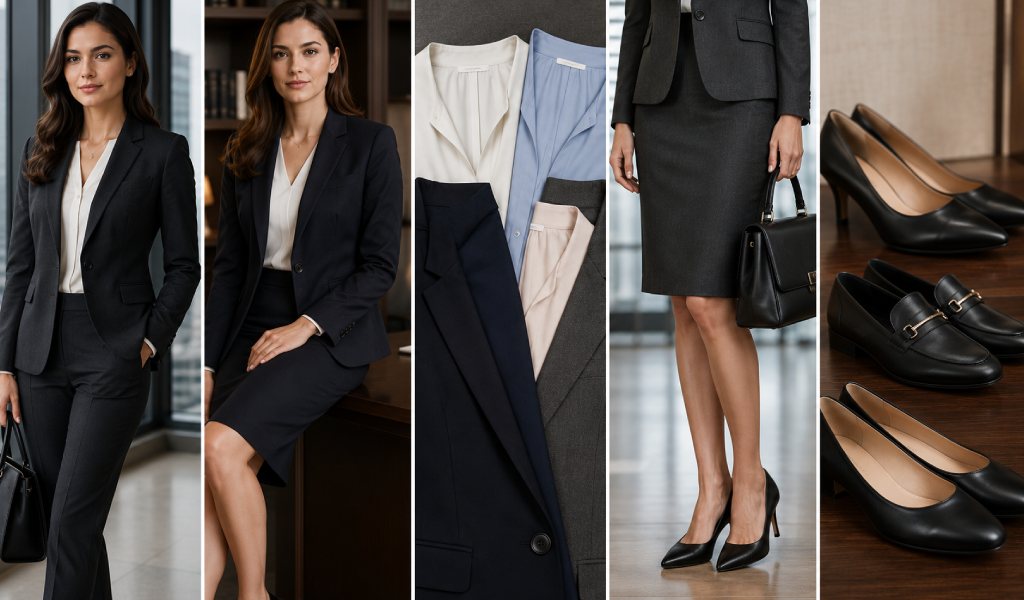
Women’s business professional attire offers slightly more variety than men’s but remains rooted in the same principles of structure and conservatism. The goal is to create a polished, sophisticated look that emphasizes professionalism and authority in every interaction.
This typically involves a structured suit in a dark neutral shade, with careful attention paid to hem lengths, fabric opacity, and the height of footwear to ensure a consistent and respectful presentation.
By selecting high-quality pieces with a minimalist design, female professionals can project confidence and executive presence.
Tailored Silhouettes: Suits and Skirts
A woman’s professional wardrobe should center on a structured pantsuit or a skirt suit in a dark neutral shade. If opting for a skirt or a dress, the hem must reach the top of the knee or fall just below it to maintain a formal standard.
Furthermore, any slits in the skirt should be minimal and centered purely for ease of movement, ensuring the look remains modest and focused on the business at hand. This level of structure communicates a seriousness of purpose that is essential in traditional industries.
Professional Layering and Blouse Selection
The garments worn under a blazer should be of high quality and reflect the overall formality of the suit. Non-sheer blouses, button-downs, or shells are the preferred choices. It is best to stick to light pastels or white tones under your blazer to create a clean, professional contrast with the darker outer layer.
Ensuring that fabrics are opaque and well-pressed is vital for maintaining a sharp, executive appearance throughout the day, especially if the jacket needs to be removed in a less formal internal meeting.
Footwear Decorum and Hosiery
Footwear for women should prioritize both style and practicality within a formal framework. Closed-toe styles like leather flats, loafers, or modest pumps are the standard. If wearing heels, they should be kept under 3 inches high to ensure professional decorum and comfort during long periods of standing or walking.
In many conservative environments or during colder weather, skin-toned hosiery or dark tights are highly encouraged to complete the ensemble and maintain the formal standard.
Defining the Line: Professional vs. Business Casual
Understanding the technical distinction between business professional and business casual is essential for avoiding embarrassing wardrobe malfunctions in high-stakes environments.
While “business casual” has become more common in tech or creative sectors, “business professional” remains the gold standard for high-level negotiations and formal corporate events.
The following comparison highlights the rigid requirements of the professional code compared to its more relaxed counterpart, ensuring you are never underdressed for a critical opportunity.
| Feature | Business Professional | Business Casual |
|---|---|---|
| Jacket Requirement | Mandatory matching suit jacket | Optional blazer, cardigan, or sport coat |
| Pants / Bottoms | Tailored suit trousers or skirt | Chinos, khakis, or dark-wash jeans (if allowed) |
| Neckwear | Ties are generally required for men | No tie required |
| Footwear | Formal Oxfords, loafers, or closed pumps | Loafers, mules, or smart lifestyle sneakers |
The Final Details: Grooming and Accessories
Executive presence is not defined by clothing alone; it is heavily influenced by grooming habits and the subtle details of your accessories. In a business professional environment, the “minimalist” philosophy prevails, ensuring that nothing distracts from your expertise.
Every accessory should serve a purpose or provide a subtle touch of elegance without becoming a focal point. Maintaining a high standard of personal grooming is the final step in presenting a cohesive and trustworthy professional image that resonates with clients and leadership.
Jewelry and Timepiece Etiquette
When selecting jewelry, the aim is to be understated and classic. Professionals should stick to a classic watch, simple stud earrings, and wedding bands if applicable. It is important to avoid noisy, dangling, or oversized jewelry that could clatter against a desk or distract colleagues during a presentation.
A high-quality, simple timepiece often serves as the most effective accessory, signaling a respect for time and punctuality while adding a refined finish to the overall look.
Grooming Standards and Fragrance Sensitivity
Personal grooming must be impeccable to match the formality of a business suit. Hair should be neatly styled and kept out of the face to facilitate clear eye contact during negotiations. For those with facial hair, it must be kept short, clean, and perfectly trimmed at all times.
Furthermore, fragrances should be handled with extreme care; keep perfumes and colognes incredibly light, or skip them entirely to protect colleagues who may have sensitivities, as a heavy scent can be viewed as unprofessional.
Professional Portfolios and Bags
The bag you carry is an extension of your professional kit and should reflect the same level of formality as your suit. You should carry a structured leather portfolio, brief bag, or a slim, professional purse.
Casual items such as athletic backpacks or canvas totes are inappropriate for business professional environments as they detract from the structured, formal image you have worked to build. A structured bag suggests organization and preparedness, two traits highly valued in any elite corporate setting.
Frequently Asked Questions
Yes, in most traditional corporate environments, a silk necktie is considered a mandatory component of the business professional dress code for men. It completes the formal look of the suit and is expected during meetings, interviews, and daily operations in sectors like law and finance.
A formal business dress can be acceptable if it is paired with a matching jacket to maintain the “matching set” principle. The key is ensuring the dress meets length requirements, reaching at least the top of the knee, and adheres to the conservative color palette of navy, charcoal, or black.
For an interview in a business professional environment, stick to the most conservative and authoritative options: navy blue or charcoal gray. These colors project professionalism and reliability. While black is acceptable, navy and charcoal are often viewed as more sophisticated and versatile in a corporate context.
Yes, high-quality leather loafers are acceptable for both men and women, provided they are polished and formal in design. For men, Oxfords remain the most formal option, but a sleek, minimalist loafer can be appropriate in many professional contexts when paired with a matching suit.
Conclusion: Investing in Your Career Trajectory
Mastering the nuances of business professional attire is an investment in your career growth and your personal brand. By adhering to the principles of matching sets, muted colors, and flawless tailoring, you demonstrate a level of discipline and respect for corporate standards that resonates with leadership.
Whether you are preparing for a critical board meeting or a routine day in a prestigious law firm, your wardrobe should reflect your commitment to excellence and your attention to detail.
Remember that the ultimate goal of this dress code is to minimize visual distractions and maximize the impact of your expertise. When your attire is beyond reproach, the focus remains entirely on your ideas, your performance, and your value to the organization.
By maintaining these high standards of dress and grooming, you ensure that you are always prepared to represent your company at the highest level, projecting a powerful image of success, reliability, and readiness for the challenges of the modern corporate landscape.