
Traditional Estonian clothing, known as rahvariided (clothes of the people), represents more than just historical fashion; it is the definitive symbol of Estonian national identity.
These garments reached their most complex and expressive forms during the 19th century, serving as a visual language for a population deeply rooted in their land. Spanning 107 historical parishes, the diversity of these costumes reflects a rich tapestry of local customs, materials, and social hierarchies.
Understanding these garments requires looking beyond the fabric to see the history of a resilient culture that used wool, linen, and silver to weave its story.
- The Historical Evolution of Rahvariided
- Essential Components of Traditional Women’s Attire
- The Architecture of Traditional Men’s Garments
- A Regional Journey Through Estonian Parishes
- The Significance of Silver and Jewelry
- Modern Preservation and Cultural Significance
- Frequently Asked Questions
- Conclusion: A Living Legacy
The Historical Evolution of Rahvariided
The development of traditional Estonian clothing is inextricably linked to the socio-economic shifts of the Baltic region. While the roots of these styles stretch back centuries, the 19th century is recognized as the “golden age” for these costumes, as it was during this period that regional variations became most distinct and refined.
Materiality and Craftsmanship
The foundation of Estonian folk dress was built upon the natural resources available to the rural population. Linen and wool were the primary materials, chosen for their durability and suitability for the Northern European climate. Linen was typically used for undergarments and summer wear due to its breathability, while wool provided the necessary warmth for the harsh Estonian winters.
The production of these garments was a labor-intensive process that took place within the home. Women were responsible for spinning, weaving, and embroidering, passing techniques down through generations.
This domestic production ensured that while a general national style existed, each parish—and often each family—could incorporate unique motifs that signaled their specific locality.
The Parish System and Identity
Estonia’s division into 107 historical parishes is the key to understanding the sheer variety of rahvariided. Each parish developed its own specific color palettes, stripe patterns for skirts, and embroidery styles. In a time before mass communication, a person’s clothing acted as a passport; one could identify a stranger’s home parish, marital status, and social standing simply by observing the cut of a coat or the pattern on a belt.
Essential Components of Traditional Women’s Attire
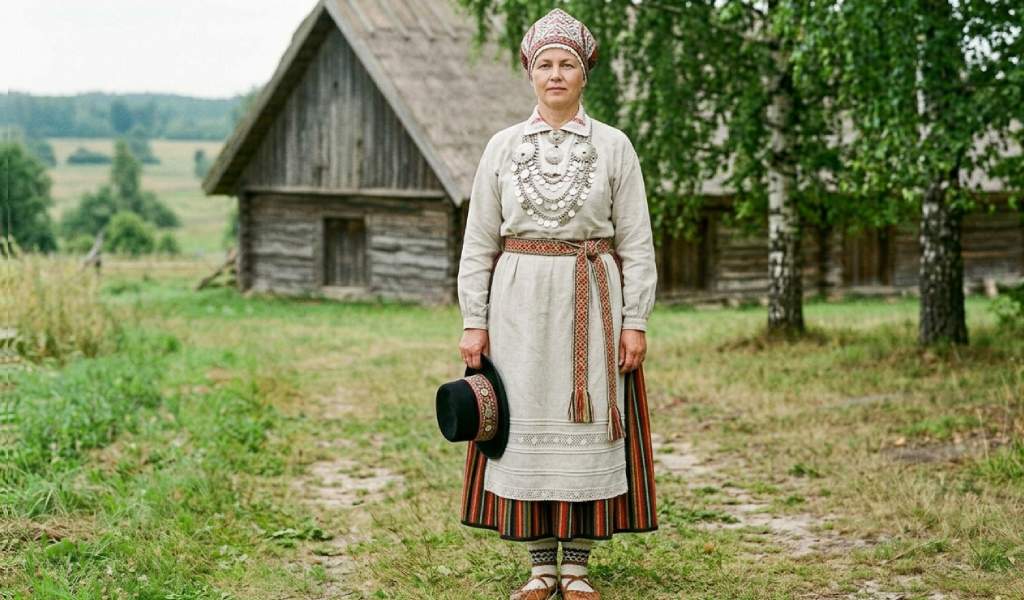
The female folk costume is a multi-layered ensemble where every piece serves both a practical and a symbolic purpose. The complexity of these outfits often meant they were reserved for festive occasions, weddings, and church attendance.
The Särk and the Northern Käised
The foundational layer for every woman was the särk, a long white linen blouse. These shirts were often decorated with delicate white embroidery on the collars and cuffs, showcasing the needlework skills of the wearer. In North Estonia, a unique variation emerged: the käised. This was a short, loose midriff blouse worn over the main garment, often featuring more elaborate ornamentation than the standard särk.
The Symbolic Power of the Seelik (Skirt)
The most recognizable element of traditional Estonian clothing is the wool skirt, or seelik, characterized by its bold vertical stripes. These stripes were not merely decorative; they were highly codified. On Kihnu Island, for instance, the color of the skirt remains a vital indicator of a woman’s life stage:
- Red: Worn by young, unmarried women or those in their prime years.
- Blue: Reserved for married women.
- Black: Worn by widows as a sign of mourning and respect.
Mandatory Accessories: Aprons and Belts
For married women, the põll (apron) was an indispensable component of the costume. Beyond its practical use in protecting the skirt, it carried significant superstitious weight; it was widely believed to be bad luck for a married woman to forget her apron.
The vöö (belt) was equally critical. These were intricately woven ribbons wrapped several times around the waist. While they added a splash of color and pattern, they also served a functional purpose by providing back support during physical labor, demonstrating how traditional Estonian clothing merged aesthetics with the realities of rural life.
Headgear and Social Status
A woman’s headgear was the primary visual cue for her marital status. Girls and young unmarried women typically wore simple headbands or floral wreaths. However, upon marriage, a woman transitioned to more substantial headwear, such as the tanu (a decorated bonnet) or a coif. This transition was a major life milestone, often celebrated during the wedding ceremony itself.
The Architecture of Traditional Men’s Garments
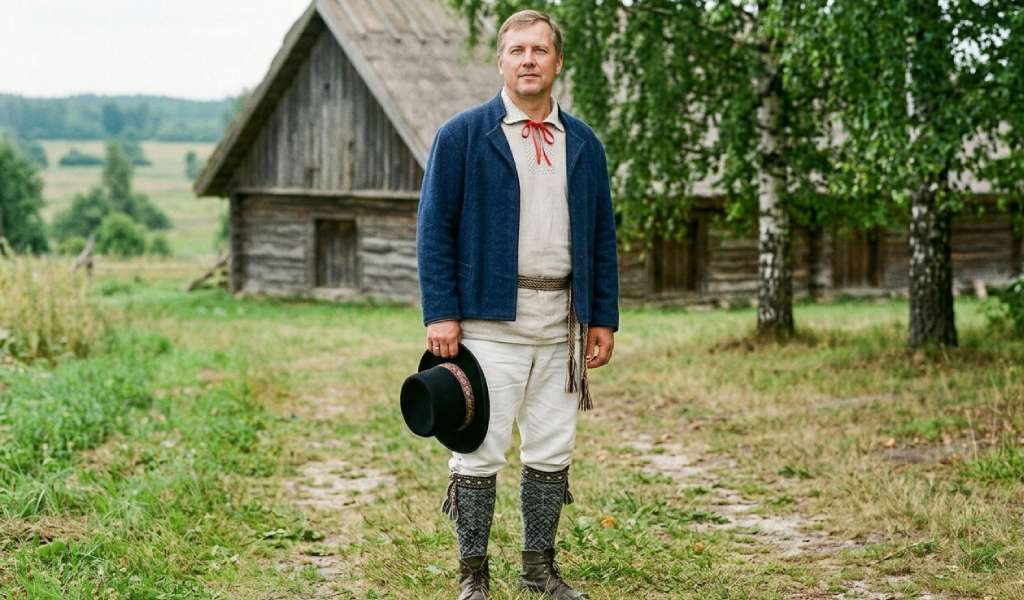
While often perceived as more subdued than women’s attire, men’s traditional Estonian clothing possessed its own refined elegance and strict structural rules.
Core Masculine Elements
The male ensemble began with a särk, which was notably shorter than the female version. Rather than elaborate embroidery, these shirts were often fastened at the neck with a simple red ribbon or a functional silver brooch. For the lower body, knee-length breeches known as püksid became the standard.
These were fastened at the knee with garters and paired with long, heavy wool socks that often featured their own set of regional embroidery patterns.
Outerwear and Protective Layers
Men’s outerwear was designed for the rugged Baltic environment. The vatt was a waist-length wool jacket that provided essential warmth. In Northern Estonia, these were frequently dyed in shades of indigo or deep blue, creating a distinct regional silhouette. During the winter months, festive outfits were topped with tall felt hats or sheepskin caps to protect against the cold.
| Feature | Women’s Costume | Men’s Costume |
|---|---|---|
| Primary Shirt | Long särk or käised | Shorter särk |
| Lower Body | Striped wool seelik | Knee-length püksid |
| Social Marker | Apron (põll) for married women | Specific hat styles for festivals |
| Fastenings | Large silver brooches | Red ribbons or small brooches |
A Regional Journey Through Estonian Parishes
The geographic diversity of Estonia led to the development of three distinct regional styles: North, South, and Western/Island Estonia. Each area utilized different dyes, cuts, and cultural influences to define their version of traditional Estonian clothing.
The Black Coats of Mulgimaa
In the southern region of Mulgimaa, the most iconic garment is the long black wool Mulgi coat. Unlike the shorter jackets found elsewhere, these long coats were a sign of wealth and status. They were characterized by their somber black color, which was strikingly contrasted by intricate red cord decorations and unique knot-work. This style remains one of the most prestigious examples of Estonian folk fashion.
Island Traditions: Muhu and Kihnu
The islands of Estonia acted as cultural anchors, preserving traditional dress long after it began to fade on the mainland.
- Muhu Island: Known for its highly technical approach to fashion, Muhu is famous for its accordion-pleated skirts. Traditionally, these pleats were set using the heat from freshly baked bread, a testament to the ingenuity of local craftswomen.
- Kihnu Island: Here, the traditional lifestyle remains so intact that folk costumes are still frequently seen in daily use, not just during festivals.
Eastern Influence: Setomaa
In the southeastern corner of Estonia, the Seto people developed a style that reflects their unique position between Estonian and Russian cultures. Seto women traditionally wore a sarafan, a pinafore-style garment influenced by Eastern Slavic traditions.
However, the most defining feature of Seto dress is the sheer volume of silver jewelry. Seto women often wear massive silver breastplates and multiple layers of chains, which are said to be audible before the wearer is even seen.
The Significance of Silver and Jewelry
In Estonian culture, jewelry was never merely ornamental; it was a protective talisman and a declaration of status. Silver was the preferred medium, believed to ward off evil spirits and bring prosperity to the wearer.
Key Jewelry Pieces
Festive sets of traditional Estonian clothing were considered incomplete without silver ornaments. The most prominent piece was the large conical silver brooch, sometimes referred to as a brooch “with eyes”. These could be several inches in diameter and occupied a central position on the chest.
Additionally, bronze chains and smaller breast ornaments were layered to create a rich, metallic texture that complemented the heavy wool of the garments.
Heritage and Value
Jewelry was often the most valuable possession a family owned, passed down from mother to daughter as part of a dowry. Because silver was expensive, the amount of jewelry a woman wore was a direct reflection of her family’s wealth. In regions like Setomaa, this reached its peak, with the weight of the silver sometimes reaching several kilograms for a single festive outfit.
Modern Preservation and Cultural Significance
While the daily use of traditional Estonian clothing declined with the onset of the industrial age and the availability of mass-produced textiles, rahvariided have experienced a powerful revival as symbols of national endurance.
The Song and Dance Celebration
The most significant modern venue for these costumes is the Estonian Song and Dance Celebration, a massive event held every five years that brings together tens of thousands of performers. For many participants, wearing the costume of their ancestral parish is a deeply emotional experience, connecting them to their lineage and the history of the Estonian state.
Resources for Research and Authenticity
For those seeking to study or recreate these garments with historical accuracy, several institutions provide invaluable data:
- The Estonian National Museum: Located in Tartu, it houses the most extensive collection of original folk costumes and textiles in the country.
- The Estonian Folk Costumes Portal: A digital resource providing detailed patterns, historical context, and regional guides for researchers and artisans.
Frequently Asked Questions
The särk is a standard long linen shirt used across Estonia, while käised is a specific short midriff blouse traditional to Northern Estonia, often worn over other garments for festive occasions.
The vertical stripes on wool skirts allowed parishes to create unique color combinations that served as regional identifiers. These patterns were highly specific to each of the 107 historical parishes.
Yes, primarily during major cultural events like the Song and Dance Celebration, weddings, and national holidays. On Kihnu Island, it is still common to see traditional elements in daily life.
Silver jewelry, especially large brooches and breastplates, was used to signal wealth and marital status, and it was traditionally believed to offer protection to the wearer.
Conclusion: A Living Legacy
Traditional Estonian clothing is far more than a museum exhibit; it is a living testament to the history and soul of the Estonian people. From the pleated skirts of Muhu to the black coats of Mulgimaa, these garments tell a story of regional pride and craftsmanship.
By preserving the techniques of weaving, embroidery, and silverwork, Estonians ensure that their cultural identity remains as durable and distinct as the wool and linen of the rahvariided itself. Whether seen on the stage of a song festival or in the halls of a national museum, these costumes remain the ultimate thread connecting Estonia’s past to its future.