
Velvet is a sensory experience defined by light and texture. From Renaissance drapes to modern athleisure, its versatility remains unmatched. This fabric transforms simple silhouettes into elegant statements through its dense pile and rich color absorption.
In this guide, you will discover technical differences between velvet types and learn to choose the right weight for your silhouette. You will also uncover professional secrets to keeping garments pristine.
Mastering these details ensures your clothing looks as high end as the fabric itself. Whether you seek the liquid drape of silk or the structure of cotton, understanding these fundamentals is the first step toward professional quality apparel.
Understanding the Nap: Why Velvet Looks Different from Every Angle
Velvet is a unique textile because it is a three dimensional fabric. Unlike flat weaves, velvet features a raised surface called the pile, which consists of thousands of tiny vertical threads. The term nap refers to the specific direction in which these fibers lay.
When you run your hand across the surface, you will notice it feels smooth in one direction and slightly resistant in the other. This physical characteristic is what creates the signature light reflectance that defines luxury apparel.
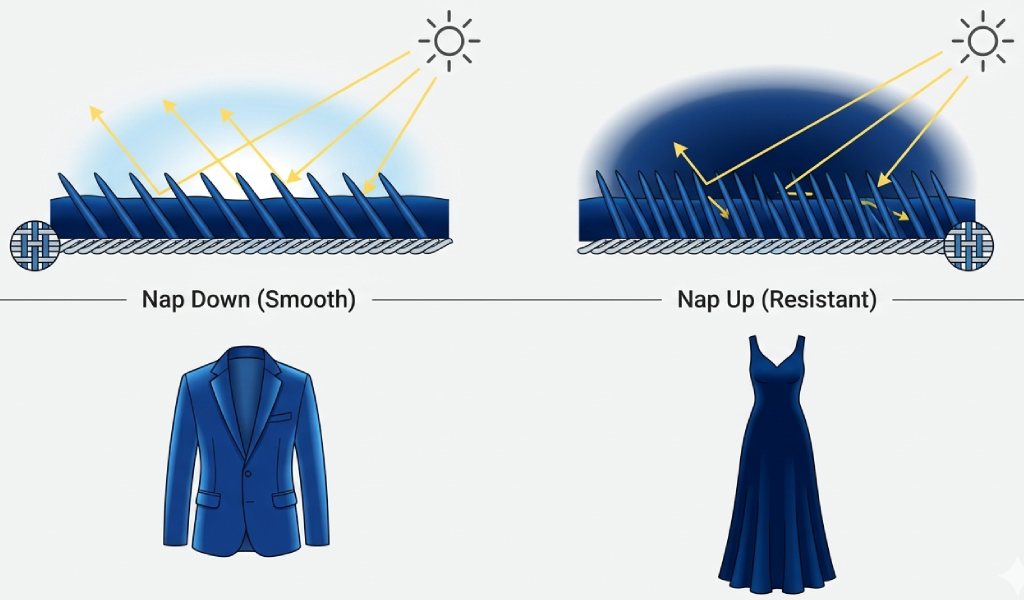
The way these fibers catch the light determines the visual depth of the garment. If you hold a piece of velvet and rotate it one hundred and eighty degrees, the color will appear to shift from a pale, shimmering hue to a deep, saturated tone.
This happens because the light either hits the side of the fiber or disappears into the shadows between the upright threads. For designers, choosing which way the nap faces is the most critical decision before the first cut is made.
Nap Up vs. Nap Down: Choosing Your Visual Finish
The direction of the nap dictates the final personality of your clothing. There is no single correct way to orient the fabric, but each choice offers a distinct aesthetic and functional result.
- Nap Down (Smooth to the touch): When the pile points toward the floor, the fabric feels silky as your hand moves downward. In this orientation, the fabric reflects more light. This creates a silvery, frosted appearance that highlights the silhouette of the wearer. It is often preferred for casual pieces or items where a lighter, brighter color is desired.
- Nap Up (Resistant to the touch): When the pile points toward the neckline, the fabric absorbs more light. This results in a much richer, darker, and more matte color. Most high end evening wear is constructed with the nap facing up because it provides the deepest possible black or jewel tone.
The Hidden Risk of “Shading” in Garment Construction
One of the most common mistakes in amateur dressmaking is ignoring the nap during the layout phase. This leads to a phenomenon known as shading.
If one sleeve is cut with the nap facing up and the bodice is cut with the nap facing down, the two sections will look like entirely different colors once the garment is assembled. This creates a mismatched, low quality appearance that is impossible to fix after cutting.
To achieve a professional result, you must ensure every pattern piece is aligned in the same direction. This often requires a one way layout, which means you may need more yardage than you would with standard cotton or linen. Always mark the back of your fabric with chalk arrows to indicate the pile direction before you begin.
Quick Summary: Which direction should velvet nap face for clothing?
For the most luxurious and deep color, velvet should be cut with the nap facing up (toward the head). This allows the pile to absorb light, resulting in a rich, saturated appearance. For a shinier, more reflective look that is smoother to the touch, the fabric can be cut with the nap facing down (toward the feet). Consistency is key: all pattern pieces must face the same direction to avoid color shading.
The 5 Main Types of Velvet for Apparel
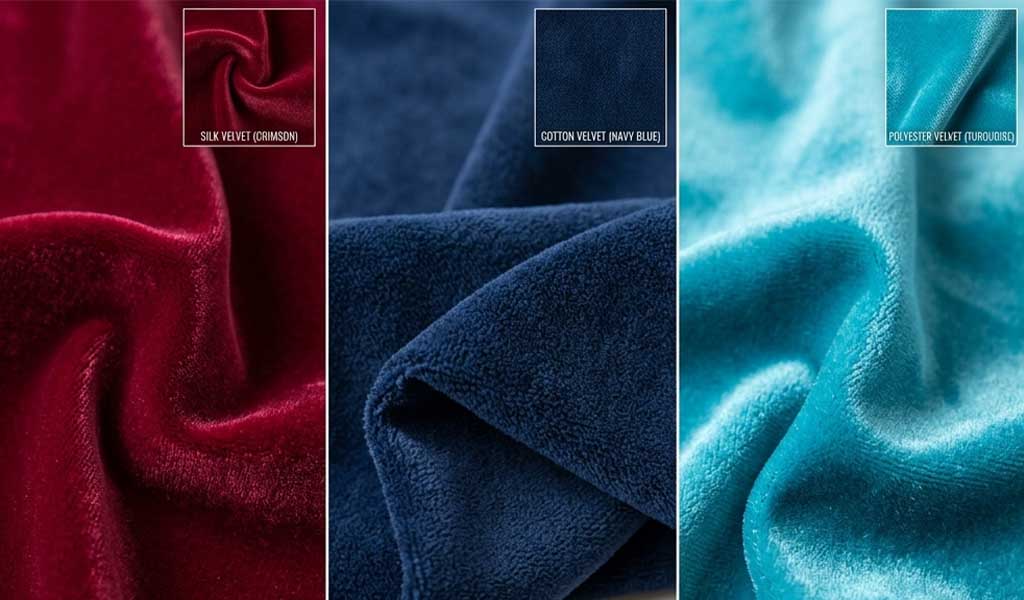
Selecting the right velvet requires an understanding of fiber content and weave construction. Each variety offers a different weight, movement, and level of formality. By matching the fabric characteristics to your garment design, you ensure the finished piece performs well and lasts for years.
Silk Velvet: The Pinnacle of Drape and Sheen
Silk velvet represents the height of textile luxury. It usually consists of a silk backing with a soft rayon or viscose pile. This combination creates a fabric with a liquid-like drape that flows over the body.
It is the most reflective variety and possesses a shimmering surface that reacts beautifully to movement. Because it is lightweight and delicate, it is the standard choice for high end evening gowns, bias cut dresses, and luxury lingerie.
Cotton Velvet: Structured and Durable for Blazers
Often referred to as velveteen, cotton velvet is a more stable and utilitarian option. The pile is typically shorter and denser than silk varieties. This creates a matte finish with very little shine. Because cotton is a sturdier fiber, this fabric holds its shape exceptionally well.
It is the ideal material for tailored clothing such as structured blazers, winter trousers, and military style jackets. It provides warmth and durability without the fragile nature of luxury blends.
Synthetic Polyester Velvet: Affordable and Washable
Modern manufacturing has made polyester velvet a staple in contemporary fashion. This version is highly resistant to crushing and wrinkling. Unlike natural fibers, synthetic velvet is often easier to maintain and can sometimes be laundered at home.
It lacks the deep breathability of silk or cotton, but it offers a consistent color and a high level of resilience. It is a practical choice for high street fashion, stage costumes, and trendy seasonal capes.
Stretch Velvet: Spandex in Modern Evening Wear
Stretch velvet has transformed the fit of formal attire. By incorporating elastane or spandex fibers into the knit base, designers can create skin tight silhouettes that remain comfortable.
This fabric moves with the wearer and eliminates the need for complex tailoring or zippers in some designs. It is the primary material used for bodycon dresses, dancewear, and modern leggings. The elasticity helps the pile recover its shape even after significant tension.
Plush and Cisele Velvet: Specialized High Fashion Textures
For those seeking visual interest beyond a solid surface, plush and cisele velvets offer unique textures. Plush velvet features an extra long pile, similar to faux fur, which provides a soft and voluminous look for outerwear.
Cisele velvet is a technical marvel where the weaver creates patterns by combining cut and uncut loops. This results in a multidimensional, sculptural effect. These fabrics are typically used for statement accents, decorative collars, or avant garde runway pieces.
The Squeeze Test for Quality
In my years of sourcing textiles, I have found that the easiest way to spot high quality velvet is the crinkle recovery. Squeeze a handful of the fabric tightly for five seconds. High grade silk or viscose blends will spring back with minimal bruising. In contrast, cheap or low density synthetics will leave permanent crush marks that are nearly impossible to steam out. This simple test reveals the density of the pile and the resilience of the fibers before you invest in yardage.
Matching Fabric Weight to Your Garment Type
Choosing the right velvet is not just about the fiber. It is also about the weight of the material. In the textile industry, weight is measured in Grams per Square Meter, commonly known as GSM.
This numerical value tells you how thick or heavy the fabric will feel when worn. Selecting the wrong weight can lead to a garment that either lacks structure or feels too cumbersome for its intended design.
A lightweight velvet will have a fluid movement, making it perfect for items that need to drape or gather. Conversely, a heavyweight velvet provides the necessary resistance and thickness for outerwear and tailored pieces.
Understanding these categories helps you avoid common mistakes, such as using a delicate silk velvet for a heavy winter coat or a stiff upholstery velvet for a flowing skirt.
Velvet Weight Comparison Table
The following table serves as a guide to matching the density of your velvet fabric with the specific clothing project you have in mind.
| Velvet Type | Weight Range (GSM) | Best Suited For | Visual Characteristic |
|---|---|---|---|
| Lightweight | 120 to 180 GSM | Camisoles, slips, scarves, and soft blouses. | High drape, fluid movement, and subtle translucency. |
| Medium Weight | 200 to 280 GSM | Wrap dresses, soft skirts, and lightweight evening gowns. | Versatile balance of structure and softness. |
| Heavyweight | 300 to 450+ GSM | Structured blazers, winter coats, and tailored trousers. | Rigid, thick pile, and excellent heat retention. |
Why GSM Matters for Your Silhouette
The GSM of your fabric directly impacts the silhouette of your clothing. For a bias cut dress, you need a low GSM to ensure the fabric hugs the curves of the body without adding bulk.
If you are designing a structured garment like a tuxedo jacket, a higher GSM is essential to support the internal construction and shoulder pads. When shopping for fabric online, always check the technical specifications for the weight to ensure it matches the requirements of your sewing pattern.
Summary: How do I choose the right velvet weight for a dress?
For a flowing or draped dress, select a lightweight velvet between 150 and 200 GSM, such as silk or viscose blends. For a structured or fitted dress that needs to hold its shape, a medium weight fabric between 250 and 300 GSM is more appropriate. Always consider the drape of the fabric alongside its weight to achieve the desired silhouette.
The Challenges of Sewing with Velvet
Sewing with velvet is often considered a rite of passage for dressmakers because of its temperamental nature. The very characteristic that makes it beautiful—the raised pile—also makes it incredibly difficult to handle under a sewing machine.
The most notorious issue is known as “creep” or “shifting.” Because the two layers of fabric have piles that lean in a specific direction, they tend to slide against each other like two sets of interlocking teeth moving in opposite directions. This results in uneven seams, puckering, and hemlines that do not align.
Furthermore, velvet is unforgiving. Every needle penetration leaves a permanent mark on the pile, meaning there is little room for error. If you have to rip out a seam, the “bruising” from the previous stitches may remain visible.
Mastering velvet requires patience, the right technical approach, and a specific set of tools designed to handle delicate, high-pile textiles.
Essential Tools for Velvet Construction
To achieve a professional finish and minimize frustration, you should prepare your workspace with these specialized tools:
- Walking Foot (Even Feed Foot): This is the most critical tool. It feeds the top and bottom layers of fabric through the machine at the same rate, significantly reducing the risk of the layers shifting.
- Microtex or Sharps Needles: Use a slim, very sharp needle (size 70/10 or 80/12) to pierce the dense backing without snagging or pulling the delicate pile fibers.
- Silk Pins or Fine Needles: Avoid thick quilting pins. Use glass-headed silk pins and place them only within the seam allowance to prevent visible holes in the main body of the garment.
- Tailor’s Chalk: Use clay-based chalk rather than wax-based markers, as wax can be difficult to remove from the pile and may leave a greasy residue.
The Tissue Paper Secret
To prevent “seam creeping” where the top layer of velvet moves faster than the bottom under the presser foot, sandwich a strip of medical tissue paper or embroidery stabilizer between the two right sides of the fabric. It provides the necessary friction to keep the pile from sliding against itself and keeps your stitch line perfectly straight. Once the seam is finished, the paper tears away easily without disturbing your stitches. This is a far more effective solution than heavy pinning, which can often distort the fabric further.
Managing Seam Bulk and Pressing
Velvet adds significant bulk to seams, which can make a garment look homemade if not managed correctly. Grading your seams—trimming the seam allowances to different widths—is essential to reduce this thickness.
Additionally, you must never press velvet with a standard flat iron. Doing so will permanently crush the pile and ruin the luster of the fabric. Always use a handheld steamer or a specialized needle board, which allows the pile to sink between wire teeth rather than being flattened against a hard surface.
Quick Tip: How do you stop velvet from shifting while sewing?
The most effective way to stop velvet from shifting is to use a walking foot and to hand-baste your seams before machine sewing. By using long, loose hand stitches to secure the layers, you prevent the pile from “walking” or creeping under the pressure of the sewing machine’s feed dogs.
Longevity and Care: Preserving the Pile
The lifespan of a velvet garment depends entirely on how you treat the pile. Because velvet is a structural weave, any damage to the upright fibers can result in permanent bald spots or flattened areas that ruin the light reflecting properties of the fabric.
Proper maintenance ensures that your investment pieces remain as luxurious as the day you bought them. Whether you are dealing with a vintage silk gown or a modern polyester blazer, the rules of preservation remain the same.
Steaming vs. Ironing: Protecting the Fabric Face
Heat is the greatest enemy of velvet when applied incorrectly. You must never touch a hot iron directly to the face of the fabric. The weight and heat of a traditional iron will instantly crush the fibers, leaving a shiny, flat mark that is often impossible to reverse. This damage is known as “bruising” and it significantly devalues the garment.
Instead of ironing, use a high quality handheld steamer. Work from the inside of the garment and allow the steam to penetrate through the backing to the fibers. This process gently lifts the pile and encourages it to return to its natural upright position.
If you encounter a stubborn wrinkle, you can use a velvet board, which is a specialized tool covered in tiny wire needles that support the pile while you apply light pressure from the back.
For those without professional equipment, hanging the garment in a bathroom during a hot shower can often provide enough ambient steam to relax minor creases.
Storage: Why Velvet Should Never Be Folded
The way you store your velvet clothing is just as important as how you clean it. You should never store velvet items folded in a drawer or a plastic bin. Over time, the weight of the folded fabric will create deep creases. Because the pile is compressed at the fold line, these marks become permanent structural breaks in the fabric.
The best way to preserve the shape of a velvet item is to hang it on a padded hanger. Ensure there is enough space in your closet so that other garments do not press against it, as even the pressure from a neighboring coat can leave an indentation.
For long term storage, use a breathable cotton garment bag rather than plastic. Plastic traps moisture and can lead to mildew or fiber degradation. If you must travel with velvet, turn the garment inside out and roll it loosely around acid free tissue paper to minimize sharp folds.
Professional Cleaning and Spot Treatment
When a spill occurs, your instinct might be to rub the spot with a damp cloth. With velvet, this is a mistake. Rubbing pushes the liquid deeper into the pile and matts the fibers together. Instead, gently blot the area with a dry, clean cloth to absorb as much moisture as possible.
Most apparel grade velvets, particularly silk and cotton blends, require professional dry cleaning to maintain their texture. Always inform your cleaner that the garment is velvet so they can use the appropriate low pressure finishing techniques.
FAQs
Can velvet be washed in a machine?
Generally, you should avoid machine washing velvet apparel. Most high quality garments made from silk or cotton are strictly dry clean only because water and agitation can permanently crush the pile.
Only 100% polyester varieties, such as certain crushed velvets, can typically survive a gentle machine cycle. Always check the care label before attempting to wash any velvet item at home to prevent irreversible damage to the fabric surface.
What is the difference between velvet and velour?
The primary difference lies in the construction of the textile. Velvet is a woven fabric that offers a dense pile and significant structure for formal clothing. In contrast, velour is a knitted fabric.
Because it is a knit, velour possesses a natural stretch that makes it ideal for casual wear and dance costumes. While velvet provides a luxury finish for evening gowns, velour is better suited for garments that require flexibility and ease of movement.
Is velvet too hot for summer clothing?
The breathability of velvet depends on its fiber content. If the garment consists of silk or viscose, it is surprisingly breathable and comfortable for moderate temperatures. However, synthetic versions made from polyester tend to trap heat against the skin.
These are best reserved for cooler climates or evening events. For warmer months, look for velvet accents or lightweight silk blends rather than heavy cotton velveteen.
Does velvet fabric fray easily?
Yes, the cut edges of velvet shed significantly during the sewing process. This happens because the vertical pile fibers are released once the base weave is cut. To ensure the longevity of your clothing, you must finish all internal edges immediately.
Using an overlocker or creating French seams is essential to prevent the fabric from unraveling and to keep the garment structurally sound.
How do I fix a crushed spot on my velvet dress?
You can often restore a flattened area using moisture and gentle agitation. Hold a handheld steamer on the reverse side of the fabric to dampen the fibers without touching them.
Once the pile is warm and slightly damp, use a soft bristled toothbrush to gently brush the fibers back into an upright position. This technique lifts the pile and restores the original luster of the garment without the risk of heat damage from an iron.
Conclusion
Choosing the right velvet for clothing is a delicate balance of aesthetics and utility. Whether you crave the liquid drape of silk or the rugged structure of cotton, understanding the underlying fiber is the essential first step to creating or purchasing a professional grade garment. This fabric requires a specific set of skills and a deep respect for its unique physical properties.
By paying close attention to nap direction, weight specifications, and specialized care routines, you can ensure that the luxury of the material is preserved through every wear. The versatility of velvet allows it to transcend seasonal trends. It remains a timeless choice for those who value depth, texture, and a sophisticated finish.
As you move forward with your next design or wardrobe addition, use the technical knowledge of pile density and fiber resilience to make an informed investment. High quality velvet is more than just a trend. It is a durable and beautiful textile that rewards careful handling with unmatched visual performance and longevity.
Ready to start your project? Download our Velvet Weight Cheat Sheet or browse our curated collection of apparel grade velvets today.