
Choosing the right plane outfit matters more than most people think. Long flights can cause stiffness, swelling, and temperature changes, so the right clothing helps you stay comfortable, support circulation, and adjust easily to cabin conditions. A well-planned outfit can reduce fatigue and make the journey feel shorter.
This guide focuses on comfort, practicality, and real travel needs, not fashion trends. It will help you pick clothes that move with your body and stay comfortable from boarding to landing. You will learn how to build a practical travel outfit, and what to wear on a flight to stay relaxed and ready for your destination.
By prioritizing breathable fabrics, stretchy fits, and layers, you can create the best travel outfit for any flight.
- Why Your Plane Outfit Matters More Than You Think
- Key Features of the Best Outfit to Wear on a Plane
- Best Bottoms to Wear on a Plane
- Best Tops for Air Travel
- Shoes That Work Best for Flights
- Accessories That Improve Your Flight Experience
- What to Avoid Wearing on a Plane
- How to Dress for Different Travel Scenarios
- Frequently Asked Questions
- Final Thoughts
Why Your Plane Outfit Matters More Than You Think
Your plane outfit can influence your comfort, energy, and overall travel experience more than most people expect. Flights often involve long periods of sitting, unpredictable temperatures, and a lot of walking between gates and security. A well-planned outfit supports your body, helps you move easily, and reduces stress during travel.
Cabin Temperature Fluctuations and Long Sitting Periods
Cabin temperature can change quickly, especially once the plane reaches cruising altitude. You may feel warm during boarding, then cold once the cabin cools down. Because of this, choosing layers is not optional, it is essential. Loose, breathable clothing helps regulate body temperature and prevents overheating. At the same time, soft, stretch fabrics reduce pressure and friction while you sit for long periods.
Long sitting periods also affect circulation, especially in the legs and feet. Tight clothing can make this worse, while relaxed fits help maintain comfort. A flight outfit comfort strategy should prioritize clothing that supports movement and circulation, not just looks good in photos.
Walking, Security Checks, and Airport Wait Times
Air travel is not just sitting on the plane. You walk through terminals, stand in security lines, and wait at gates. Shoes and clothing that feel comfortable while walking make the process easier and reduce fatigue. Slip-on shoes help during security checks, while flexible clothing allows you to move quickly without discomfort.
Waiting times can also affect your comfort, especially if you are tired or carrying luggage. Choosing a practical outfit helps you stay calm and relaxed, and it reduces the need for constant adjusting or fidgeting. A long flight clothing strategy should consider the full journey, not just the time spent in the air.
Comfort, Mobility, and Health Considerations During Flights
Comfort and mobility are closely linked to health during flights. When you wear tight or stiff clothing, your body can feel restricted, which may increase stiffness and discomfort. Loose, stretchy clothing supports better posture and easier movement.
Health considerations also include circulation, swelling, and muscle stiffness. A well-chosen outfit helps reduce these issues, especially on long flights. Additionally, choosing breathable fabrics and easy layers supports better comfort and overall wellbeing. In short, a thoughtful plane outfit can improve your travel experience, and it can help you arrive feeling more rested and ready to go.
Key Features of the Best Outfit to Wear on a Plane
Choosing the best outfit to wear on a plane is less about fashion and more about how your body feels during hours of sitting, walking, and adjusting to cabin conditions. A well-planned flight outfit supports comfort, movement, and temperature control from boarding to landing. The features below focus on what actually makes a difference in the air.
Comfort Comes First
Loose, non-restrictive clothing is essential when flying. Sitting for long periods can cause stiffness, pressure, and swelling, especially around the waist, hips, and legs. Clothes that feel fine while standing may quickly become uncomfortable once you are seated for hours. Relaxed fits allow better circulation and reduce irritation, which helps you arrive feeling less fatigued.
Stretch and softness matter just as much. Fabrics that move with your body prevent pulling or digging when you shift positions, stand up, or sit down again. Soft textures also reduce friction against the skin, which is especially important on long flights where constant movement is limited. Comfortable clothes for flying are those you can forget you are wearing, even after several hours in the same seat.
Breathable and Stretchy Fabrics
The best materials for air travel balance breathability, flexibility, and comfort. Cabin air can feel dry or inconsistent, so fabrics that allow airflow help regulate body temperature and prevent overheating. Materials such as cotton, merino wool, and bamboo blends absorb moisture and feel gentler on the skin during extended wear.
Blended fabrics often perform better than stiff, single-fiber options. When natural fibers are combined with a small amount of elastane or spandex, the result is clothing that stretches without losing shape. This makes them ideal as the best fabric for travel clothes, since they adapt to sitting, standing, and walking through airports. A breathable travel outfit also reduces discomfort caused by temperature shifts and limited airflow inside the cabin.
Easy Layers for Changing Temperatures
Layering is essential on planes because cabin temperatures can change quickly and unpredictably. What feels comfortable during boarding may feel cold once the plane reaches cruising altitude. Light layers allow you to adjust without disturbing your seatmates or digging through your bag mid-flight.
Practical layering options include zip-up hoodies, lightweight cardigans, or thin jackets that can be removed easily. Oversized but light outer layers work well because they provide warmth without adding bulk. For longer journeys, layering for flights helps maintain comfort during sleep, meal service, and arrival. Knowing what to wear on a long flight often comes down to choosing layers that adapt as your environment changes, rather than relying on a single heavy piece.
Best Bottoms to Wear on a Plane
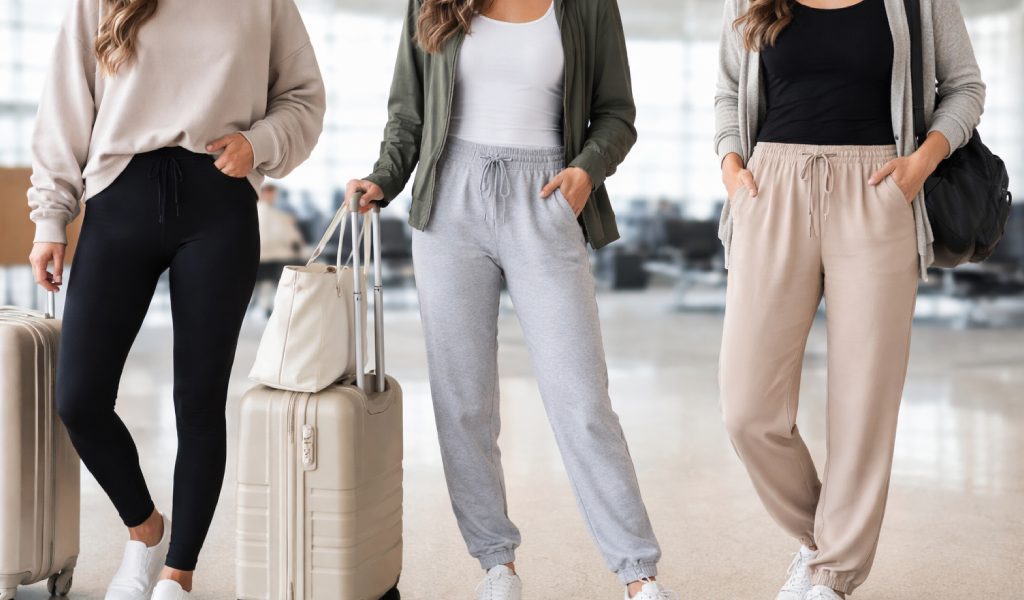
When deciding what pants to wear on a plane, comfort and flexibility should always come before appearance. The right bottoms support long hours of sitting, allow easy movement through airports, and adapt to changes in temperature and activity. Choosing wisely can make a noticeable difference in how relaxed you feel during and after your flight.
Leggings, Joggers, and Relaxed Trousers
Leggings are a popular choice for flying because they stretch easily and do not restrict movement. High-quality leggings with a thicker fabric provide comfort without feeling flimsy, which helps during long periods of sitting. They also pair well with longer tops or light layers for coverage and warmth.
Joggers offer a slightly roomier fit while still maintaining flexibility. Elastic waistbands and soft materials make them ideal for walking, sitting, and resting in the same outfit. Relaxed-fit trousers, especially those made with stretch fabrics, are another smart option. They provide a more polished look while still delivering the comfort needed for air travel. For many travelers, these styles represent the best pants for flying because they balance ease and practicality.
Why Flexibility and Comfort Matter More Than Style
Flights involve more than just sitting in one place. You move through terminals, stand in security lines, adjust your posture in your seat, and often sleep in an upright position. Pants that stretch and feel soft reduce pressure points and allow better circulation, which helps prevent stiffness and discomfort.
While style matters, clothing that looks good but feels tight or stiff can quickly become a distraction. Comfortable bottoms help you stay relaxed, focused, and rested, especially on longer journeys. Choosing function first does not mean sacrificing appearance, it means selecting pieces that work with your body instead of against it.
What to Avoid in Travel Bottoms
Some pants are simply not suited for flying. Tight jeans, rigid waistbands, and non-stretch fabrics can feel restrictive after a short time. These styles may limit movement and increase discomfort during long flights.
It is also best to avoid bottoms with heavy hardware, thick seams, or tight cuffs. These details can press into the skin while seated and make temperature regulation harder. When thinking about what pants to wear on a plane, aim for simplicity, softness, and flexibility. These qualities help ensure your travel outfit remains comfortable from departure to arrival.
Best Tops for Air Travel
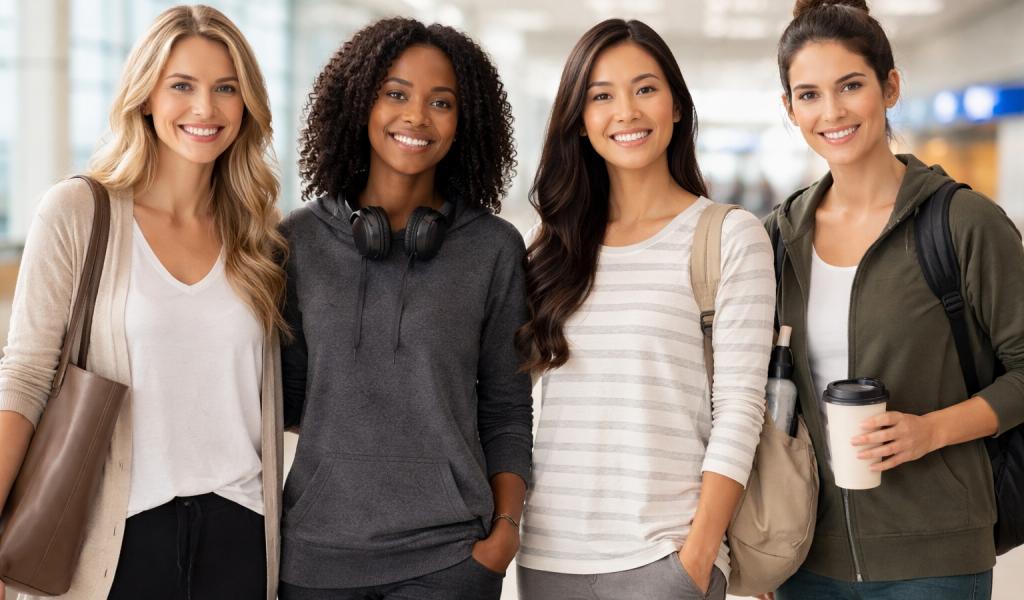
The right top can make a flight feel much more comfortable, especially when cabin temperatures change and you spend hours sitting. The best tops for flying are those that keep you relaxed, support easy movement, and help regulate body temperature without adding bulk. A comfortable flight outfit starts with the right layers and fabric choices.
Loose-Fitting and Longer Tops
Loose-fitting tops reduce pressure around the chest and waist, which is important when you sit for long periods. A top that fits too tightly can cause discomfort, especially during meals or when you shift positions. Longer tops also help prevent constant readjusting while seated, and they work well with leggings or joggers for full coverage and comfort.
In addition, tops with a slightly relaxed cut allow better airflow. This can reduce overheating, and it also makes it easier to layer when needed. When choosing a top, focus on fit and comfort first, and style second. This helps you stay comfortable from boarding to landing.
Fabrics That Prevent Overheating or Chill
The best materials for plane tops balance breathability and warmth. Cotton and merino wool are excellent choices because they feel soft on the skin and manage moisture well. These fabrics help prevent overheating while also keeping you comfortable if the cabin gets cold.
Blended fabrics with a small amount of stretch also perform well, because they move with your body and maintain shape. Avoid thick, heavy materials that trap heat or stiff fabrics that feel uncomfortable while sitting. The goal is to choose fabrics that keep you comfortable in changing cabin conditions.
Practical Top Choices for Long Flights
Practical top choices for long flights include:
- Loose cotton T-shirts or long sleeves that allow airflow and feel soft
- Lightweight sweatshirts or hoodies that provide warmth without feeling heavy
- Button-up shirts for easy temperature control, since you can open or close them
- Lightweight sweaters or cardigans that layer easily and pack well
These options work well with travel outfits because they offer flexibility, comfort, and ease of movement. Choosing the right top can also help you feel more relaxed, especially during long journeys where comfort is the main priority.
Shoes That Work Best for Flights
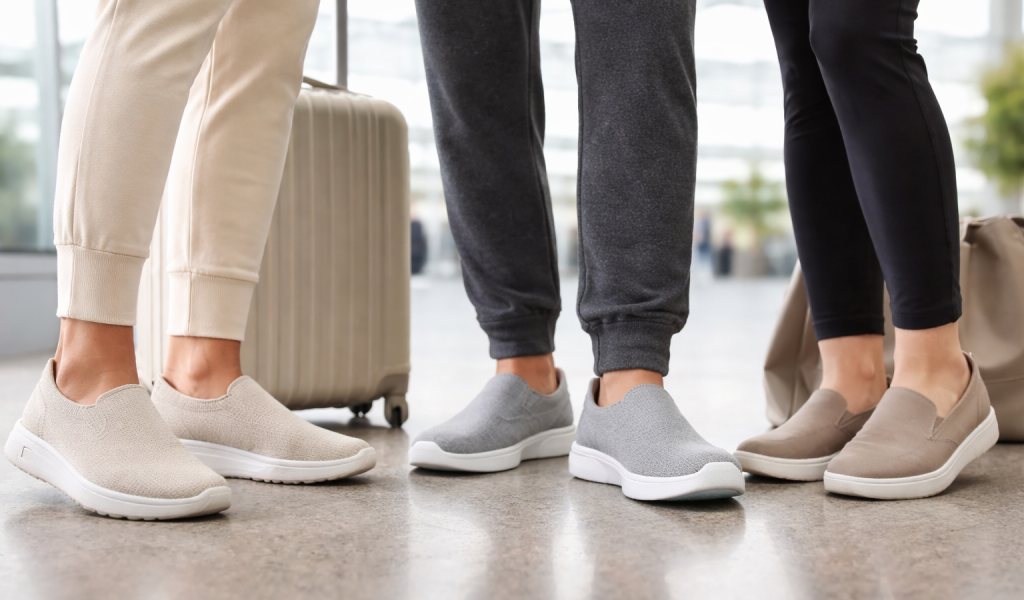
Choosing the right shoes for a flight is about more than style. It affects comfort while sitting, walking through airports, and passing through security. The best shoes to wear on a plane are comfortable, easy to remove, and flexible enough to handle changes in temperature and foot swelling.
Slip-On Sneakers, Loafers, Flats
Slip-on sneakers are a top choice for many travelers because they provide support while remaining easy to take off during security checks. They also work well for walking long distances in terminals. Loafers and flats offer a clean, simple option that still feels comfortable, especially if they have a flexible sole and soft material.
Shoes that fit well but do not feel tight are ideal. Footwear that allows your feet to breathe and move slightly reduces discomfort during long flights. Comfortable travel shoes should support your feet without squeezing them, especially in the toe area.
Why Foot Swelling Matters During Flights
Foot swelling is common during flights, especially on longer trips. Sitting for hours can slow circulation, causing feet and ankles to swell. Shoes that fit perfectly on the ground may feel tight once swelling begins, which can cause pain or discomfort.
To prevent this, choose shoes with some room and flexibility. Shoes with adjustable straps or softer material can help accommodate swelling. Also, wearing warm socks or compression socks can support circulation and reduce swelling during long flights.
Security and Walking Comfort Considerations
Airport security often requires you to remove shoes, so ease of removal matters. Slip-on shoes or shoes with minimal laces speed up the process and reduce stress during busy travel times.
Walking through terminals also requires comfort, because distances can be long and surfaces hard. Shoes with good cushioning help protect your feet and reduce fatigue. Additionally, breathable shoes help prevent overheating and keep your feet feeling fresh, especially during long travel days.
Choosing the right shoes for your flight can make a big difference in your overall travel experience, especially when you combine comfort, support, and convenience.
Accessories That Improve Your Flight Experience
Small accessories can make a big difference on a flight. They help you stay comfortable, manage temperature changes, and reduce fatigue. The right accessories also make travel easier, without adding unnecessary weight to your carry-on.
Socks and Compression Socks
Socks are more important than most travelers realize, especially on long flights. They keep your feet warm, reduce friction inside shoes, and support circulation. For many people, wearing thicker socks or travel socks is enough to stay comfortable.
Compression socks become especially useful on long flights, or when you are prone to swelling. They help improve blood flow, reduce swelling, and can lower the risk of discomfort during long periods of sitting. Compression socks for flights work best when you wear them on trips longer than four hours, or if you already notice foot or ankle swelling. They are also helpful for travelers with circulation issues or those who want extra support during long journeys.
Scarves and Light Travel Extras
A large scarf is one of the most versatile travel accessories. It can act as a light blanket, a neck pillow, or an extra layer when the cabin gets cold. Scarves also take up very little space in your bag, yet they provide a big comfort boost.
Other light travel extras include a small travel pillow, eye mask, or earplugs. These items help you rest during the flight without adding bulk to your luggage. Choosing travel outfit accessories that serve multiple purposes helps you stay comfortable without overpacking, and it keeps your carry-on simple and manageable.
What to Avoid Wearing on a Plane
Choosing the right plane outfit is not only about what you should wear, but also what you should avoid. The wrong clothing can cause discomfort, reduce circulation, and make a long flight feel much longer. To stay comfortable and relaxed, focus on practical choices that support your body during travel.
Tight, Stiff, or Restrictive Clothing
Tight clothing can quickly become uncomfortable during a flight, especially when you sit for long periods. Items like skinny jeans, tight skirts, or fitted trousers can restrict circulation and cause pressure around the waist and hips. This can lead to swelling, discomfort, and a feeling of stiffness when you finally stand up.
Stiff fabrics also cause problems because they do not move with your body. When you shift positions, stretch, or stand up, stiff clothing can dig into the skin or pull in awkward ways. Choosing softer, stretchy fabrics helps your body stay relaxed, and it reduces the chance of irritation during the flight.
Outfits That Require Frequent Adjustment
Some outfits need constant fixing, especially when sitting for hours. Clothes that ride up, slip down, or require frequent tucking can become annoying and distracting. During a flight, you want clothing that stays in place and feels stable, so you can focus on rest or work without constant readjustment.
Also, avoid clothing with too many buttons, tight waistbands, or complicated layers that are hard to manage in a small seat. Simple, comfortable pieces help you stay calm and relaxed, which makes the flight more pleasant.
Why Fashion-Only Choices Can Backfire While Flying
Fashion-only choices often prioritize appearance over comfort. While a tight, stylish outfit may look great, it can cause discomfort during a long flight. Shoes that look good but feel tight, or pants that look polished but restrict movement, can create stress and fatigue.
For air travel, comfort should come first because it affects your energy, mood, and overall experience. If your outfit does not support movement or circulation, it can make even a short flight feel uncomfortable. When you choose what not to wear on a plane, focus on clothing that supports your body, not just your style.
How to Dress for Different Travel Scenarios
Different trips call for different outfit strategies. While the basics of comfort and layering remain the same, long-haul flights and changing weather conditions require extra planning. Choosing the right clothing can help you stay relaxed, manage temperature shifts, and reduce fatigue throughout your journey.
Long-Haul Flights
Long flights require outfits that support comfort, circulation, and movement. When you sit for many hours, your body needs clothing that allows blood flow and reduces stiffness. Choosing loose, stretchy bottoms and tops helps prevent tight pressure points and keeps you comfortable during long periods of sitting.
For overnight flights, layering strategies become more important. Start with a breathable base layer, add a warm mid layer, and keep a light outer layer handy. This allows you to adjust to changing cabin temperatures. Additionally, consider wearing compression socks to support circulation, especially on flights longer than four hours. A long flight outfit should focus on comfort, ease, and flexibility, rather than style alone.
Cold to Hot or Hot to Cold Destinations
When your destination has a temperature shift, the best strategy is smart layering and carry-on planning. For cold to hot trips, wear lightweight layers and keep your warm jacket or sweater in your carry-on. This way, you can stay comfortable at the airport and on the plane, then easily remove layers once you arrive.
For hot to cold travel, start with lighter clothing for departure and keep a warm layer ready for arrival. Choose adaptable clothing that works in both climates, such as breathable fabrics and flexible layers. Packing a compact scarf or lightweight sweater helps you adjust without adding bulk to your luggage. A travel outfit for changing weather should be simple, flexible, and easy to modify as temperatures shift.
Frequently Asked Questions
What is the most comfortable outfit to wear on a plane?
The most comfortable outfit for flying includes soft, stretchy, and breathable fabrics. Choose loose-fitting tops and bottoms that do not squeeze your waist or restrict movement. A good travel outfit often includes leggings or joggers, a loose cotton or merino top, and a light layer like a cardigan or hoodie. Comfortable shoes that are easy to slip on and off also matter, especially during security checks. Overall, comfort comes from clothing that supports circulation, allows movement, and adapts to changing temperatures.
Are leggings or jeans better for flying?
Leggings are generally better for flying because they stretch and move with your body. They provide comfort during long sitting periods and reduce pressure on the waist and hips. Jeans can feel stiff and tight, especially after several hours in the same position. If you prefer jeans, choose a relaxed-fit style with stretch fabric, but leggings still offer the best comfort and flexibility for most travelers.
What shoes should I wear on a long flight?
The best shoes for long flights are comfortable, supportive, and easy to remove. Slip-on sneakers, loafers, or flats work well because they reduce stress during security checks and allow for quick movement through airports. Shoes should have enough room to accommodate slight foot swelling. In addition, choosing shoes with cushioning and breathable material helps keep your feet comfortable during long walking and sitting periods.
Is it better to layer when flying?
Yes, layering is one of the most practical strategies for flying. Cabin temperatures can change throughout the flight, and you may feel warm during boarding and cold at cruising altitude. Layering allows you to adjust easily without needing to change your entire outfit. A light base layer, a warm mid layer, and a thin outer layer are often the best combination. This approach keeps you comfortable and prepared for temperature changes during the journey.
Final Thoughts
Choosing the best plane outfit is really about comfort, breathability, and smart layering. When you wear soft, stretchy fabrics and build your outfit in layers, you can handle temperature changes, reduce stiffness, and stay relaxed throughout the flight. These simple choices make a big difference in how you feel when you arrive.
Above all, prioritize people-first comfort over fashion trends. The goal is to feel good during long sitting periods, while walking through airports, and during security checks. In the end, the most important thing is a practical outfit that supports your body, not a style that causes discomfort.
With the right pieces, you can create comfortable travel clothing that keeps you calm, rested, and ready for your trip.