
Getting the right pant size is not as simple as picking a number off a label. Sizes often vary between brands and regions, which makes it easy to end up with pants that feel too tight, too loose, or just uncomfortable. This is why understanding how to measure pant size correctly is essential, especially when shopping online where you cannot try items before buying.
Accurate measurements help you compare your body to any pant size chart with confidence. Instead of guessing, you rely on real numbers that stay consistent across different styles and brands. The key measurements include waist, hips, inseam, and rise, each playing a specific role in how pants fit and feel.
By learning these basics, you can navigate men’s vs women’s pant sizing more easily and choose pants that match your body measurements for pants with better accuracy and comfort.
- Why Knowing Your Exact Pant Size Is Important
- Tools You Need to Measure Pant Size at Home
- How to Measure Pant Size for Men (Step-by-Step)
- How to Measure Pant Size for Women (Step-by-Step)
- How to Measure Pants Using a Pair That Fits Perfectly
- Understanding Pant Rise (High, Mid, Low Rise Explained)
- Pant Size Conversion Charts (US, UK, EU)
- Tips for Getting the Perfect Fit Every Time
- FAQ – Pant Size Measurement Guide
- Conclusion
Why Knowing Your Exact Pant Size Is Important
Understanding your exact pant size is one of the simplest ways to improve how your clothes fit. Many people rely on size labels alone, but those labels are not consistent across brands or regions. When you know your real body measurements, you remove guesswork and make better choices, especially when shopping online.
Problems with Inconsistent Sizing and Vanity Sizing
Pant sizes are not standardized. A size that fits perfectly in one brand may feel completely different in another. This happens because each brand uses its own sizing system, production methods, and target fit.
Vanity sizing adds another layer of confusion. Some brands label their products with smaller size numbers than the actual measurements to make customers feel more comfortable. As a result, the same person might wear two or three different sizes depending on the brand.
This inconsistency makes it difficult to rely on labels alone. It often leads to returns, wasted time, and frustration. Without a clear reference, it becomes harder to understand why pant sizes vary so much between products.
Benefits of Using Body Measurements Instead of Label Sizes
Using your actual measurements gives you a consistent and reliable way to choose the right size. Your waist, hips, and inseam do not change based on the brand, so they act as a stable guide when comparing different size charts.
Accurate clothing measurements help you match your body to a product’s specifications instead of guessing based on size numbers. This approach is especially useful when following an online shopping size guide, where you cannot try items before buying.
It also improves overall comfort and appearance. Pants that match your real measurements are more likely to fit properly at the waist, sit correctly on your hips, and fall at the right length.
Tools You Need to Measure Pant Size at Home
Getting accurate body measurements does not require expensive equipment. With a few simple tools, you can measure yourself for clothes at home with confidence and consistency. The goal is to keep your measurements precise, repeatable, and easy to record so you can use them across different brands and size charts.
Essential Measuring Tools
A flexible measuring tape is the most important tool for taking body measurements. Choose a soft cloth or plastic tape that can wrap around your waist, hips, and legs without bending or losing shape. Keep the tape snug against your body, but not tight, so you get a realistic measurement that reflects how your pants should actually fit.
A mirror helps you check that the measuring tape stays level and straight. For example, when measuring your hips or waist, the tape should remain parallel to the floor all the way around. Even a slight tilt can change your numbers, which can lead to poor fit when buying pants online.
An optional helper can improve accuracy, especially for inseam measurements. It is difficult to measure from the crotch to the ankle on your own while standing straight. With someone assisting you, the tape stays in the correct position, and the measurement is more reliable.
Optional Tools for Better Precision
A notebook or phone app helps you record your measurements immediately. This avoids guessing later or mixing up numbers. It also allows you to track changes over time if your body measurements shift. Keeping a clear record makes future shopping faster and more accurate.
A well-fitting pair of pants can serve as a practical reference point. Lay the pants flat on a surface and measure the waistband and inseam. This method works well if you already own pants that fit you perfectly. It gives you a quick way to compare sizes when checking a brand’s chart, especially when you cannot measure your body directly.
Using these tools together creates a simple system for DIY clothing measurements at home. Once you have your numbers written down, you can confidently compare them with any size guide and choose the right fit without second guessing.
How to Measure Pant Size for Men (Step-by-Step)
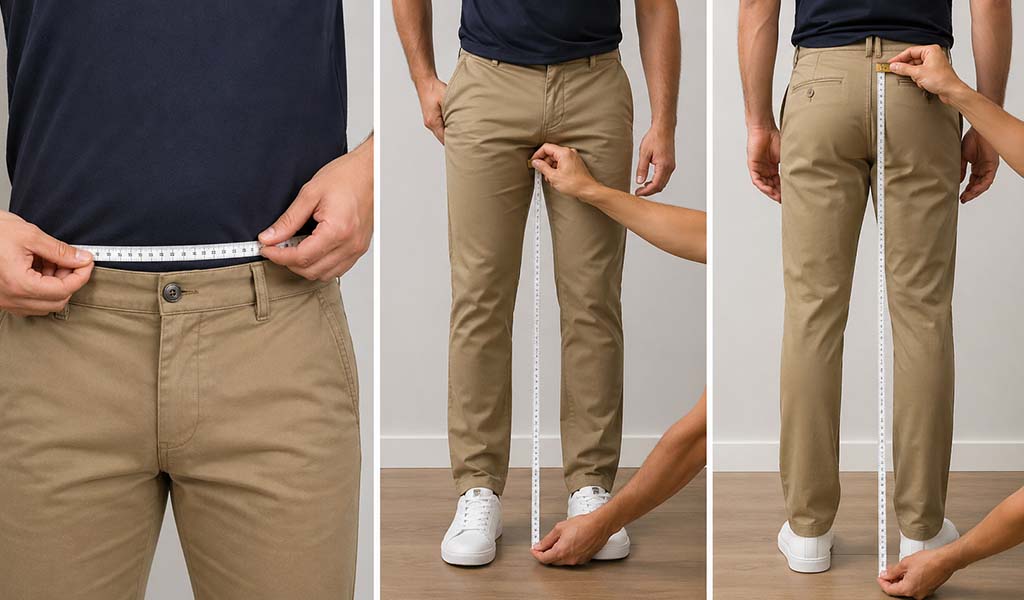
Measuring your pant size correctly at home gives you a reliable base for choosing the right fit across different brands. Instead of guessing your size, you can use a simple process that focuses on accuracy and comfort. Follow these steps carefully, and you will get consistent results you can trust when comparing any men’s pants sizing chart.
Measuring Waist Size for Men
Start by finding your natural waistline. This is usually around your belly button, not where low-rise pants sit on your hips. Stand straight and relaxed, then wrap the measuring tape around this area.
Make sure the tape stays level all the way around your body. It should sit flat against your skin without twisting. Keep it snug but not tight, and leave a little room for comfort by placing one finger between the tape and your waist. This small adjustment helps you avoid choosing pants that feel restrictive when you sit or move.
For the most accurate result, measure twice and take the average if there is a slight difference. This step is especially useful if you are between sizes.
Measuring Inseam Length
The inseam measures the inner leg length, from the crotch down to the ankle. Stand upright with your feet slightly apart. Place the tape at the highest point of your inner thigh and extend it straight down to your ankle.
If measuring alone feels difficult, use a pair of pants that already fits you well. Lay them flat and measure from the crotch seam to the bottom hem. This method often gives a more consistent inseam measurement.
Think about how you want your pants to sit on your shoes. For a clean, modern look, the hem should lightly touch the top of your shoes. If you prefer a slightly longer break, you can add a small amount to your measurement. Footwear matters here, so consider whether you usually wear sneakers, dress shoes, or boots.
Understanding Men’s Pant Size Format (Waist × Inseam)
Men’s pants sizes are typically written as two numbers, such as 32×30. The first number refers to the waist measurement in inches, while the second number represents the inseam length.
For example, a size 32×30 means a 32-inch waist and a 30-inch inseam. This format makes it easier to find a combination that matches both your waist and leg length without needing separate sizing systems.
Keep in mind that even with this clear format, sizing can still vary slightly between brands. That is why it is important to compare your measurements with the brand’s size chart before buying. Once you know your numbers, you can shop with more confidence and avoid common sizing mistakes.
How to Measure Pant Size for Women (Step-by-Step)
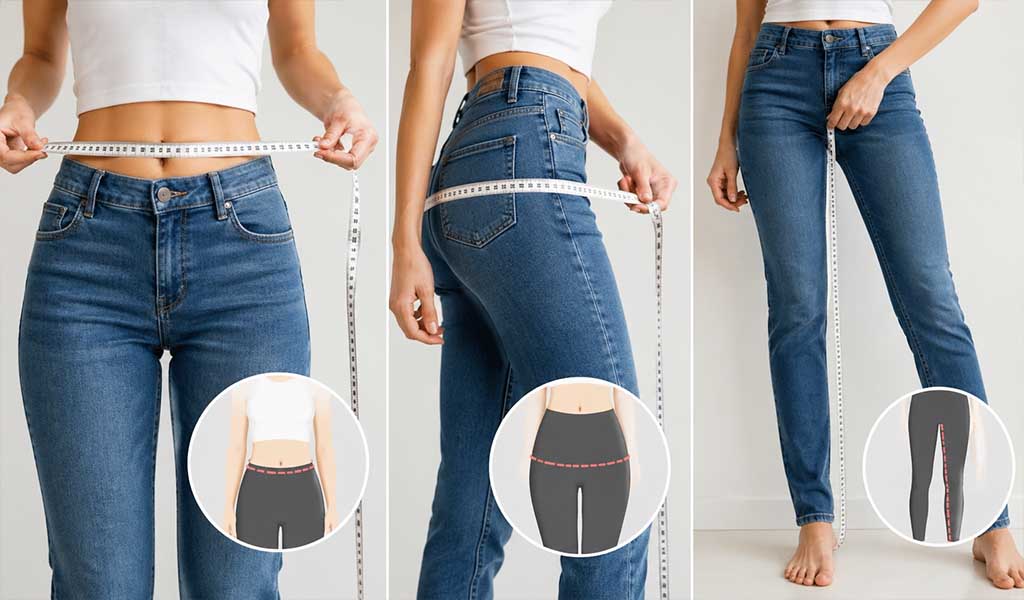
Women’s pant sizing can feel inconsistent, but accurate body measurements make the process much easier. Instead of relying on size labels, focus on three key areas: waist, hips, and inseam. When measured correctly, these numbers help you compare any women’s clothing size chart and choose a better fit with confidence.
Measuring Natural Waist
To find your natural waist, bend slightly to one side. You will notice a natural crease forming along your torso. This is the narrowest part of your waist and the correct place to measure.
Stand upright and wrap the measuring tape around this area. Keep the tape level and parallel to the floor. It should feel snug but not tight. Avoid pulling it too firmly, as this can lead to a smaller measurement that does not reflect real comfort.
For consistent results, measure in front of a mirror and check that the tape stays straight all the way around. This step is especially important for high-waisted pants, where even a small error can affect the fit.
Measuring Hips Correctly
Hip measurement is one of the most important steps in finding well-fitting pants. Stand with your feet together and wrap the tape around the fullest part of your hips and buttocks.
The tape should remain straight and level from front to back. If it dips or rises at any point, the measurement may be inaccurate. Using a mirror can help you confirm proper alignment.
Do not pull the tape too tight. It should rest comfortably against your body. A correct hip measurement ensures that your pants will not feel restrictive when sitting, walking, or bending.
Measuring Inseam for Women
The inseam measures the length from the crotch to the bottom of your ankle. Stand straight and measure along the inside of your leg. Keep the tape close to your skin and follow a straight line down.
If you plan to wear flats, measure to your ankle bone for a standard length. If you often wear heels, add about one to two inches to your inseam. This adjustment helps prevent pants from looking too short when styled with elevated footwear.
If measuring your inseam feels difficult, you can use a pair of well-fitting pants as a guide. Lay them flat and measure from the crotch seam to the hem for a reliable reference.
What Is Vanity Sizing in Women’s Pants?
Vanity sizing refers to the practice of labeling clothes with smaller sizes than their actual measurements. This means a size 8 in one brand may fit like a size 10 in another. As a result, relying only on size numbers can lead to confusion and inconsistent fit.
Different brands use their own sizing standards, which is why checking a women’s pant size guide based on actual measurements is essential. Your waist and hip measurements provide a more accurate reference point than any label.
To avoid sizing issues, always compare your numbers with the brand’s chart before purchasing. This simple habit reduces guesswork and helps you choose pants that fit well from the start.
How to Measure Pants Using a Pair That Fits Perfectly
If you already own pants that fit you well, you can use them as a reliable reference to find your correct size. This method is simple, practical, and especially useful when you cannot take body measurements directly. It also helps when comparing sizes across different brands during online shopping.
Before you begin, place the pants on a flat surface like a table or bed. Smooth out any wrinkles and make sure seams are aligned properly. This ensures your measurements stay accurate and consistent.
Measuring Waist from Existing Pants
Start by fastening the pants completely, including the button or hook. Lay the waistband flat and straight without stretching it.
Measure across the top of the waistband from one side to the other. Once you have that number, double it to get the full waist measurement. For example, if the flat measurement is 16 inches, the waist size is 32 inches.
Make sure the waistband is not pulled tight or left loose. A natural, relaxed position gives the most accurate result. This method works well because it reflects how the pants actually fit your body in real use.
Measuring Inseam from Pants
To measure the inseam, locate the crotch seam where the legs meet. Place the measuring tape at this point and run it straight down to the bottom hem of the pant leg.
Keep the tape aligned with the inner seam for accuracy. Avoid measuring along the outer leg, as that gives a different length. If the pants have been worn frequently, check that the hem is still in its original position to avoid small errors.
This measurement tells you the exact leg length that works for your height and preferred style.
When This Method Works Best
Using existing pants as a guide works best when the pair fits you comfortably in both waist and length. It is especially helpful if you are shopping online and want to compare your current fit with a brand’s size chart.
This approach is also useful if you find it difficult to measure your body on your own. It removes guesswork and gives you a clear reference based on something you already trust.
However, keep in mind that fabric type and stretch can affect fit. Pants made with elastic or stretch materials may feel different from structured fabrics like denim or formal trousers. For best results, use this method alongside standard body measurements when possible.
Understanding Pant Rise (High, Mid, Low Rise Explained)
Pant rise plays a key role in how your pants fit, feel, and look on your body. Many people focus only on waist and inseam, but rise affects comfort, posture, and overall style just as much. Once you understand how rise works, it becomes easier to choose pants that suit your body shape and daily needs.
Definition of Rise
Rise refers to the distance from the crotch seam to the top of the waistband. It determines where the pants sit on your torso.
There are three common types. High rise sits above the natural waist, often near or slightly above the belly button. Mid rise rests just below the navel and offers a balanced position. Low rise sits on the hips, well below the natural waistline.
You can measure rise on a pair of pants by laying them flat and measuring from the crotch seam straight up to the top of the waistband. This gives you a clear idea of how the pants are designed to sit on your body.
Differences in Fit and Comfort
Each rise level creates a different fit and wearing experience. High rise pants provide more coverage and support around the waist. They often feel secure and stay in place, which makes them a good option for long periods of sitting or movement.
Mid rise pants offer a middle ground. They feel natural for most body types and work well for both casual and formal wear. Many people prefer this style because it balances comfort and appearance without feeling too high or too low.
Low rise pants sit lower on the hips, which can create a relaxed and modern look. However, they may feel less secure for some people, especially when bending or sitting. Comfort often depends on personal preference and how the pants are styled.
Choosing the Right Rise for Your Body Type
The right rise depends on your body shape, comfort level, and how you plan to wear your pants. If you want more support around your waist or prefer a structured fit, high rise is often a good choice. It can also help create a more defined waistline.
If you are looking for an everyday option that works across different outfits, mid rise is usually the most versatile. It suits a wide range of body types and feels comfortable in most situations.
If you prefer a lower waistline or want a more relaxed style, low rise may work better. It pairs well with casual outfits but requires careful sizing to avoid discomfort.
Pant Size Conversion Charts (US, UK, EU)
Sizing systems vary across regions, which can make shopping confusing, especially when buying from international brands. A clear conversion reference helps you translate your measurements into the right size, whether you are comparing US, UK, or EU labels. While charts are useful, always remember that brand-specific sizing can still differ, so use your body measurements as the final guide.
Men’s Size Conversion Chart
Men’s pants are often based on waist and inseam in inches, but international labels may use different number systems. The chart below gives a general comparison to help you match your size across regions.
| US Waist (inches) | UK Size | EU Size |
|---|---|---|
| 28 | 28 | 44 |
| 30 | 30 | 46 |
| 32 | 32 | 48 |
| 34 | 34 | 50 |
| 36 | 36 | 52 |
| 38 | 38 | 54 |
| 40 | 40 | 56 |
For example, if your waist measures 32 inches, you will typically look for EU size 48 when shopping from European brands. In most cases, UK sizing aligns closely with US sizing for men, but it is still worth double-checking.
Women’s Size Conversion Chart
Women’s sizing uses a different system, often based on numbered sizes rather than direct waist measurements. This makes conversion more important when switching between regions.
| US Size | UK Size | EU Size |
|---|---|---|
| 2 | 6 | 34 |
| 4 | 8 | 36 |
| 6 | 10 | 38 |
| 8 | 12 | 40 |
| 10 | 14 | 42 |
| 12 | 16 | 44 |
| 14 | 18 | 46 |
For instance, a US size 8 عادة corresponds to a UK size 12 and EU size 40. However, these numbers can shift depending on the brand, which is why checking measurements against a women’s clothing size chart is essential.
Tips for International Size Comparison
Start with your actual body measurements instead of relying only on size labels. This approach gives you a consistent reference point when comparing across regions.
Next, review the brand’s size guide carefully. Some brands provide both inch and centimeter measurements, which makes it easier to match your waist and hip size accurately.
Pay attention to fit descriptions such as slim, regular, or relaxed. Even if the size number matches, the cut of the pants can change how they feel and look.
Also consider fabric type. Stretch materials may allow a closer fit, while rigid fabrics require a bit more room for comfort.
Finally, if you are between sizes, check customer reviews when available. Many shoppers share whether items run small or large, which can help you make a better decision before buying.
Using a reliable pant size conversion chart along with your measurements will reduce guesswork and help you choose the right size across US, UK, and EU systems.
Tips for Getting the Perfect Fit Every Time
Finding pants that fit well is not just about choosing the right size. Small details like fabric, cut, and measurement accuracy all play a role. When you combine these factors, you can avoid common sizing problems and choose pants that feel comfortable and look right in everyday use.
Measure More Than Once
Take each measurement at least twice to confirm accuracy. Even a small difference can affect how your pants fit, especially around the waist and hips. If the numbers are slightly different, use the average. This approach reduces the risk of ordering a size that feels too tight or too loose.
It also helps to measure at the same time of day, since body measurements can change slightly due to posture, meals, or activity level.
Consider Fabric Stretch
Fabric type has a direct impact on fit. Pants made with stretch materials such as elastane or spandex can adapt to your body, which allows a closer fit without feeling restrictive. On the other hand, rigid fabrics like denim or formal cotton hold their shape and may require a bit more room.
Always check whether the fabric includes stretch. If it does not, you may need to size up slightly for comfort, especially if you are between sizes.
Check Product Descriptions Carefully
Before buying, read the product details closely. Look for information about fit type, fabric composition, and sizing notes. Many brands mention whether their pants run small, true to size, or slightly large.
Some listings also include model measurements and the size worn. This can give you a better idea of how the pants might fit on a body similar to yours. Taking a few extra seconds to review these details can save you from returns or exchanges.
Understand Slim, Regular, and Relaxed Fits
Fit type changes how pants feel and look, even if the size is the same. Slim fit pants are cut closer to the body, which creates a sharper and more tailored appearance. They work well if you prefer a modern, close fit.
Regular fit offers a balanced shape. It provides enough room for comfort without looking too loose or too tight. This is often the safest choice for everyday wear.
Relaxed fit gives more space through the hips and legs. It allows easier movement and can feel more comfortable for long periods of sitting or active use.
FAQ – Pant Size Measurement Guide
How do I know my pant size without measuring tape?
If you do not have a measuring tape, you can still estimate your size using a well-fitting pair of pants. Lay them flat on a surface, measure the waistband across using a ruler or any straight measuring tool, then double that number to get the waist size. For length, measure from the crotch seam to the hem to find the inseam.
You can also use a piece of string or cord. Wrap it around your waist, mark the point where it meets, then measure that length against a ruler. While this method is less precise than a flexible tape, it still gives a useful estimate when measuring pants at home.
What is the difference between waist size and pant size?
Waist size refers to the actual measurement around your body at the waistline. Pant size, on the other hand, usually includes both waist and inseam measurements, especially in men’s sizing formats like 32×30.
In women’s sizing, pant size is often shown as a number such as 6 or 10, which does not directly reflect exact measurements. This is why checking a size chart and comparing it with your body measurements is more reliable than relying on labels alone.
How do I measure inseam accurately at home?
To measure inseam at home, stand straight and place the measuring tape at the crotch, then run it down the inside of your leg to your ankle. Keep the tape close to your skin and follow a straight line.
If measuring yourself feels difficult, use a pair of pants that fits well. Lay them flat and measure from the crotch seam to the bottom hem. This method often gives a more consistent result and is widely used in home measurement guides.
Why do my pant sizes change between brands?
Pant sizes vary because brands use different sizing standards, patterns, and target fits. Some also apply vanity sizing, which means they label clothes with smaller sizes than the actual measurements.
Fabric and design also play a role. Stretch materials can feel more forgiving, while structured fabrics may feel tighter even in the same size. Because of these differences, it is normal to wear different sizes across brands. This is why accurate clothing measurements are more reliable than size labels.
Should I size up or down if I’m between sizes?
If you are between sizes, the right choice depends on fabric and fit. For non-stretch fabrics, sizing up usually provides better comfort and allows easier movement. For stretch fabrics, you may choose the smaller size for a closer fit.
Also consider the style of the pants. Slim-fit designs may feel tighter, so sizing up can improve comfort. Relaxed styles already offer more room, so your usual size may work fine.
When in doubt, check the product description and size chart. Combining this with your measurements helps you make a more confident decision and find the fit that works best for your needs.
Conclusion
Accurate measurements are the foundation of finding pants that truly fit well. When you rely on your actual waist, hips, inseam, and rise instead of guessing by size labels, you remove much of the uncertainty that comes with modern sizing. This simple step leads to better comfort, a cleaner fit, and more confidence in your choices.
Before buying any pair of pants, take a moment to compare your measurements with the brand’s size chart. Even if you think you know your size, this extra check helps you avoid common sizing issues caused by differences between brands and regions.
In the long run, measuring correctly saves both time and money. You reduce the need for returns, avoid frustration, and build a wardrobe that fits consistently across styles. A few minutes spent measuring can make every future purchase easier and more reliable.